
Global monitoring systems handled over 100 trillion security signals daily in 2025.
While GenAI creates sophisticated noise, the actual entry points remain old-school methods like weak passwords.
If Safelyo had to choose one word to define 2025, it would be: “DEEP-TRUST“. Blind faith in digital interactions has become a major vulnerability.
Here are the 6 trends Safelyo has selected and synthesized to define 2025, drawing on data from Verizon, IBM, Microsoft, ESET, and Cyble.
Key takeaways:
- Stolen credentials: The #1 attack vector; supply chain breaches surged to nearly 30%.
- ClickFix surge: Fake error popups (up 517%) now trick users into manually installing malware.
- Token theft: Hackers are stealing session cookies to bypass standard MFA protections.
- Infostealers: Login-harvesting malware has become the main trigger for ransomware.
- Shadow AI: Unsanctioned use of public AI tools is causing permanent data leaks.
- Deepfakes: Advanced AI voice and video are successfully deceiving even trained experts.
1. Trend #1: Stolen credentials & Supply chain attacks
The Verizon 2025 Data Breach Investigations Report (DBIR) confirms that attackers prefer the path of least resistance over complex “Zero-Day” hacks.
- The “log in” breach: Stolen credentials retained the throne as the #1 initial access vector and accounted for approximately 22% of all breaches. Hackers bypass code-breaking by simply logging in with valid usernames and passwords purchased on the dark web.
- The race to patch: Exploitation of vulnerabilities held the #2 spot at approximately 20%. This volume stems from automated bots scanning for unpatched edge devices like VPNs and firewalls.
- The supply chain blindspot: The most concerning shift in the Verizon data is the reliance on third parties. Breaches involving supply chain or third-party vectors surged to nearly 30%. Attackers compromise trusted software vendors to gain backdoor access to your data.
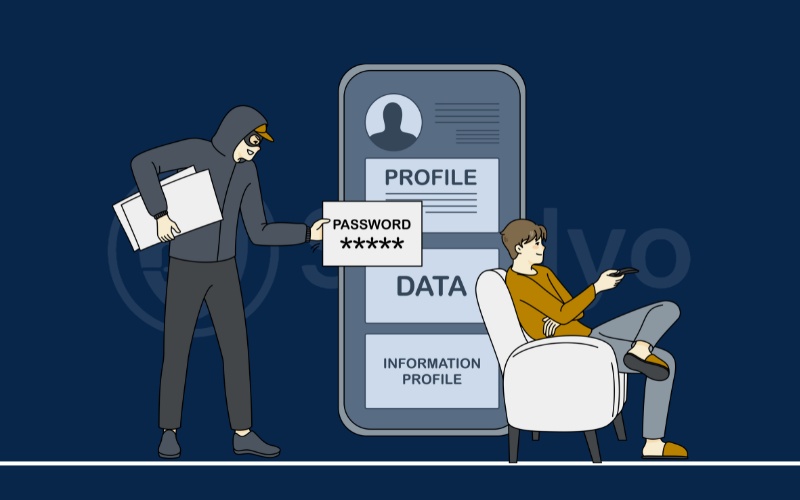
In the past, if you got hacked, it was likely your fault. In 2025, you can do everything right, such as setting a strong password and enabling 2FA, and still lose your data.
The reality is that attackers are compromising the trusted software companies and apps you use daily. When a vendor you trust gets breached, your data leaks out through their open door.
2. Trend #2: The “ClickFix” technique & Fake error popups
The breakout star of 2025 was a psychological trick rather than a piece of sophisticated code.
According to the ESET H1 2025 Threat Report, a technique known as “ClickFix” (or HTML/FakeCaptcha) saw a massive 517% increase in detections during the first half of the year.
Traditional malware downloads are often blocked by antivirus software. To bypass this, ClickFix displays a fake error pop-up, such as “Word update failed” or “Verify you are human.”
It then tricks the user into copying a malicious PowerShell script to their clipboard and pasting it into their own terminal to “fix” the issue.

This trend highlights a critical shift where hackers weaponize the user’s desire to solve problems quickly. They use the victim’s own hands to bypass technical security controls.
3. Trend #3: Identity attacks & The rise of “Token Theft”
Identity has become the new perimeter. The Microsoft Digital Defense Report 2025 highlights that identity-based attacks rose by 32% in the first half of the year alone.
As users increasingly adopt Multi-Factor Authentication (MFA), hackers evolve. The report notes a sharp rise in “Token Theft”. This technique involves attackers stealing the digital session cookies generated after a user logs in. This allows them to bypass the password and MFA check entirely to hijack an active session.
Despite this, basic hygiene remains the primary failure point. Microsoft data confirms that MFA can still block over 99% of unauthorized access attempts. This is particularly effective against the automated password-spraying bots that make up the vast majority of traffic.
4. Trend #4: Infostealer malware & Cookie harvesting
Infostealers have evolved from a gaming nuisance into the primary precursor for major corporate ransomware attacks. These malware families are designed to harvest logins and cookies.
Families like Lumma Stealer and RedLine dominated 2025. The ESET Threat Report detailed massive disruption operations against the Lumma botnet in May. The network resurfaced twice within months. This resilience proves the “Cybercrime-as-a-Service” economy is robust and adaptable.
These stealers act as the tools used to harvest the “Tokens” mentioned in Trend #3. This effectively turns a simple personal device infection into a full-scale corporate breach.
5. Trend #5: The “Shadow AI” risk
The newest entry to the threat landscape is “Shadow AI”. This term refers to employees using unsanctioned Generative AI tools for work without IT approval.
According to IBM, 20% of organizations reported suffering a breach due to Shadow AI or unmanaged data sources. More critically, 97% of organizations that experienced an AI-related breach lacked proper access controls for their AI systems.
The cost of this negligence is steep. Breaches involving Shadow AI took longer to identify and cost roughly $670,000 more than the average breach because sensitive data fed into public AI models becomes virtually impossible to retrieve.
6. Trend #6: AI Deepfakes
In 2025, Generative AI deepfakes reached a level of unprecedented realism, producing video calls, voices, and images that are nearly impossible to distinguish from reality. This evolution has successfully fooled experts and bypassed even the most advanced biometric systems.
- Real-time deception: New software enables live face-swaps during video sessions, allowing fraudsters to efficiently bypass identity verification (KYC) checks. This has led to a significant surge in the volume of deepfake incidents globally.
- Financial impact: Hyper-realistic scams are soaring. Common tactics include:
- Executive impersonation: Mimicking senior leaders during video calls to authorize urgent fund transfers.
- Authority manipulation: Impersonating officials to coerce victims into compliance.
- Stealthy audio threats: Audio deepfakes have become a particularly dangerous tool. Unlike video, they lack visual glitches, making them harder to detect. This technology is frequently used to stage fake emergency scenarios, such as kidnappings.
Because standard sensory perception often fails against this flawless AI deception, the human element has become the final line of defense. Families and individuals are now increasingly relying on specific secret codewords to verify identities during suspicious or high-pressure calls.
Take a look at the comparison below. I used AI to recreate this person from a real photo, showing just how easily their outfit and expression can be changed.

7. Safelyo’s recommended toolkit: Your 2026 defense stack
Safelyo recommends 5 essential tools for the individual user to counter these risks.
7.1. The identity vault: Password managers & passkeys
Weak memory-based passwords lead directly to credential stuffing attacks. You must replace manual memorization with cryptographic authentication.
- Use a password manager: Automate the creation of complex and unique codes for every account (e.g., Bitwarden or 1Password).
- Enable passkeys: Switch to phishing-resistant logins via biometrics or hardware keys wherever possible (e.g., YubiKey or FaceID).
7.2. The shielded browser: Ad & script blocking
Malicious ads and fake error popups are the primary delivery method for “ClickFix” attacks. You need a browser environment that blocks silent scripts by default.
- Privacy-first browsing: Use browsers that block trackers and fingerprinting out of the box (e.g., Brave or Hardened Firefox).
- Essential extension: Install a script blocker to neutralize fake overlays before they appear (e.g., uBlock Origin).
7.3. The clean inbox: Email aliasing
A supply chain breach at a trusted vendor exposes your primary email to permanent spam and phishing. The most effective defense is to hide your real address.
- Create virtual identities: Use services that generate unique “dummy” addresses for each online registration (e.g., SimpleLogin, Firefox Relay, or Apple Hide My Email).
- The kill switch: Simply delete the specific alias if a website is breached to keep your main inbox secure.
7.4. The privacy cloak: Personal VPN
VPN reduces exposure on hostile or untrusted networks, especially against passive monitoring and session hijacking attempts., You need to encrypt your traffic to ensure data integrity.
- Encrypt connections: Activate a VPN from a verified provider whenever you leave your home network (e.g., ProtonVPN or NordVPN).
- Threat protection: Select services that block connections to known malware command servers at the DNS level.
7.5. The AI filter: Local LLMs
“Shadow AI” leaks occur when users paste sensitive personal or work data into public chatbots. You should keep data processing offline to ensure privacy.
- Privacy settings: Disable chat history and model training immediately in the settings of online tools.
- Go offline: Run AI models directly on your local hardware for sensitive tasks to ensure no data leaves your device (e.g., LM Studio or Jan.ai).
7. FAQs
How can I identify a “ClickFix” attack?
Look for unexpected “fix-it” pop-ups on websites or in emails claiming your browser or software has an error. These attacks typically prompt you to paste a malicious script into your command terminal (PowerShell or Terminal) to “solve” the issue.
Is MFA still effective against “Token Theft”?
Standard MFA is less effective because token theft bypasses the login phase entirely by stealing an active session. To counter this, you should use Phishing-resistant MFA (like FIDO2/Passkeys) or Conditional Access policies that require device compliance.
Why is “Shadow AI” a significant corporate risk?
It leads to Data Leakage and Compliance Violations. When employees use unauthorized AI tools, sensitive corporate data or trade secrets can be fed into public models, making that information part of the AI’s training set without the company’s control.
How should I defend against AI Deepfakes?
Establish out-of-band verification (calling a known number) and use “code words” for sensitive requests. Technically, utilize tools that detect synthetic media and implement strict identity verification processes for high-value transactions.
9. Conclusion
Reflecting on our 2025 cybersecurity recap, it is clear that human behavior remains the industry’s biggest vulnerability. Despite rapid technological leaps, we still tend to sacrifice safety for speed by using weak passwords or unverified AI tools.
In 2026, hackers are no longer just breaking down digital doors; they are waiting for you to let them in. They exploit our trust through sophisticated fake alerts and the constant desire for “quick fix” convenience.
To stay protected, you must shift your mindset from “Convenience First” to “Zero Trust.” Adopting a proactive security stance is the only way to navigate an increasingly hostile online landscape effectively.
Explore the practical guides and security tool reviews on Safelyo to fully equip your digital survival kit today.