

Is Hola VPN safe? No, the free version of Hola VPN is not considered safe.
Many users are attracted to its free service for tasks like streaming geo-restricted content or bypassing internet censorship. However, its free model is built on a peer-to-peer (P2P) network. This system exposes you to significant privacy and security dangers.
Key takeaways:
- Hola’s free VPN uses a P2P (peer-to-peer) system.
- This means you share your IP address with other users.
- You could be held liable for others’ online activities.
- Secure VPNs use private servers, not other users’ devices.
1. Is Hola VPN safe to use?
The free version of Hola VPN is not considered safe. This is especially true for users who value online privacy and security. The core problem lies with its peer-to-peer (P2P) model. When you use the free service, your computer does not just act as a client. It also becomes an “exit node” for the network.
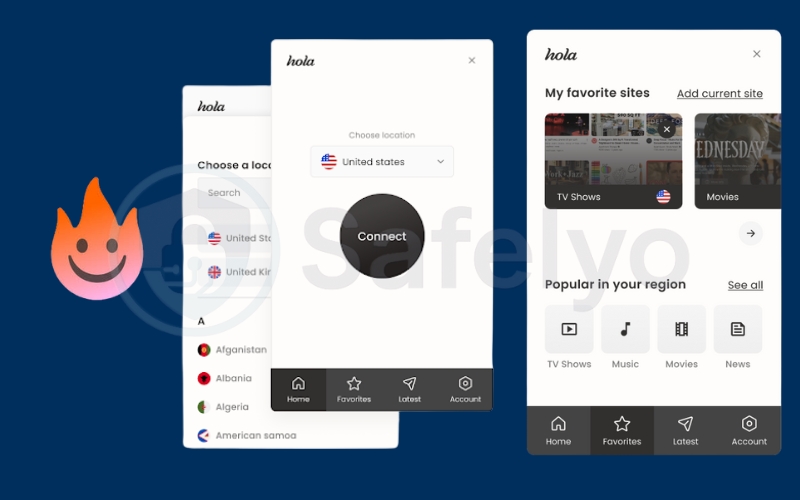
This means other strangers using Hola can route their internet traffic through your device. Their online activities, whether legal or illegal, will then appear to come from your IP address. This is a fundamentally risky architecture. It is completely different from a traditional VPN.
2. How Hola’s P2P network puts you at risk
To understand the danger, we must look at the technology Hola uses. This P2P system is the source of all major security concerns.
2.1. What is a peer-to-peer (P2P) VPN?
A standard VPN routes your traffic through a private server. This server is owned and managed by the VPN company.
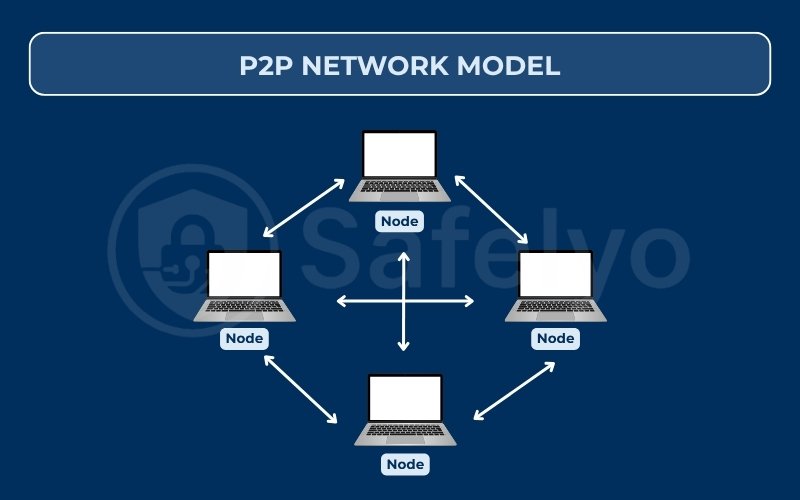
In contrast, a P2P VPN like Hola uses P2P technology to act like a resource-sharing network. It routes your traffic through other users’ devices. These users are called “peers”. When you want to access content from another country, Hola connects you through a user in that country.
2.2. How strangers can use your IP address
When your device acts as an exit node, other Hola users use your IP.
For example, a user in another country might want to visit a website. Their traffic can “exit” onto the internet from your computer. The website they visit will log the request as coming from your home IP address. You have no control over who uses your IP. You also do not know what they are doing with it.
2.3. Why this is different from a standard secure VPN
This P2P model is the opposite of a secure VPN’s purpose.
A safe VPN creates an encrypted tunnel. This tunnel connects your device and a private server. Your real IP address is hidden. It is replaced by the VPN server’s IP. You might share that server IP with other users, but it belongs to a data center. It is not tied to anyone’s personal home network.
3. The main dangers of using Hola’s free VPN
When I evaluate a VPN’s safety, I look for potential points of failure. With Hola, the P2P model is not just a weak point. It is a fundamental design flaw.
It creates very real risks for its users. These dangers are not theoretical. They are a direct consequence of the service’s architecture.
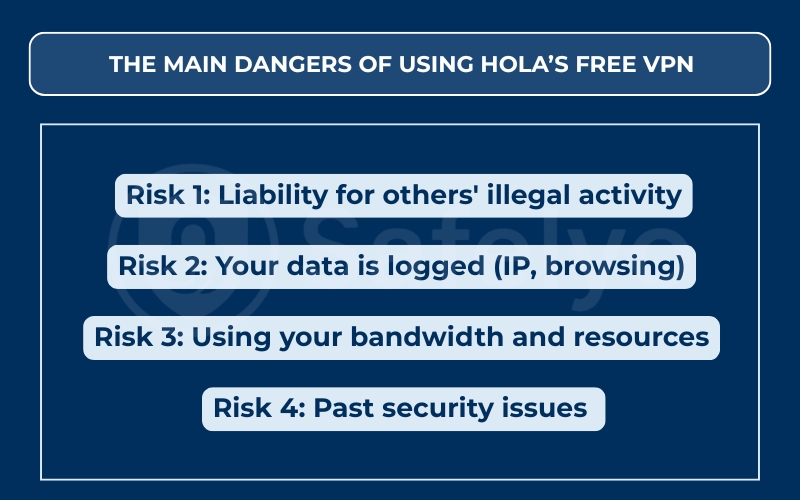
3.1. Risk 1: Liability for others’ illegal activity
This is the biggest and most concerning danger.
If another Hola user uses your IP for illegal activities, law enforcement will trace that activity. The trail will lead directly back to your IP address. This could include downloading copyrighted material, hacking, or accessing illicit content. Proving your innocence in such a situation can be extremely difficult.
3.2. Risk 2: Your data is logged (IP, browsing)
Truly safe VPNs have strict no-logs policies. They do not collect or store information about your online activity.
In contrast, Hola’s privacy policy states that it does log user data. This data can include your real IP address, connection timestamps, and the websites you visit. This logging practice completely undermines the core purpose of using a VPN for privacy.
3.3. Risk 3: Using your bandwidth and resources
Since your device is part of the P2P network, other users consume your internet bandwidth. This can significantly slow down your connection performance. It affects your other online activities.
Additionally, your computer’s processing power is used to manage other users’ traffic. You are essentially paying for their “free” service with your own digital resources.
3.4. Risk 4: Past security issues (the Luminati ‘botnet’ connection)
Hola has a problematic history. In 2015, a major scandal was exposed. Hola sold the bandwidth of its free users through a sister company, Luminati (now Bright Data).
This service allowed paying customers to use Hola’s P2P network as a massive residential proxy service. This network was then abused to conduct a botnet-style attack. This history raises serious questions about the company’s trustworthiness.
4. Is the Hola VPN premium (paid) version safe?
Hola does offer a premium (paid) version. This version functions more like a traditional VPN. It does not route your traffic through other peers. It also does not use your device as an exit node. In theory, this is safer than the free version.
However, trust is a critical factor when choosing a VPN. Given the company’s logging practices and problematic history, it is difficult to trust. Your data is still logged, so your privacy is not guaranteed.
Many secure, audited, and transparent alternatives, such as NordVPN, Surfshark, or ExpressVPN, exist in the same price range.
5. Key features of a truly safe and private VPN
As a security reviewer, I always check for a few non-negotiable features. If you are looking for a safe VPN alternative, make sure the service includes the following. These are the gold standards in the industry.
5.1. A strict, audited no-logs policy
A strict, audited no-log policy is the most important feature for privacy. The VPN provider must not collect, store, or share any data about your online activities.
This includes your browsing history, IP address, or connection timestamps. The best providers have this policy. They also hire independent, third-party auditors to verify it.
The company’s jurisdiction (the country it operates from) is also critical, as it dictates data retention laws.
5.2. Standard encryption and protocols
A safe VPN must use strong encryption. The industry standard is AES-256. This is the same encryption used by governments and banks.
The service should also offer secure and modern VPN protocols. Look for options like OpenVPN and WireGuard. These protocols ensure your data is protected from hackers and snoops.
Additionally, a safe VPN must provide features like a kill switch to block internet access if the VPN connection drops. It must also protect against DNS leaks to ensure your real IP is never exposed.
5.3. Private, secure server infrastructure (not P2P)
A secure VPN must operate its own network of private servers. Your traffic should only pass through servers owned or securely controlled by the VPN company.
These are typically located in secure data centers. Your connection should never be routed through another user’s device. This is the fundamental difference that makes standard VPNs safe.
6. FAQs about Is Hola VPN safe
Here are some quick answers to common questions about Hola VPN’s safety.
Can I be tracked when using Hola VPN?
Yes. Hola’s free version logs your activity and your real IP address. While your IP might be hidden from a website (by using someone else’s IP), Hola itself is tracking you.
Is Hola VPN legal?
Yes, the software itself is legal to use in most countries. However, you can be held responsible if your IP address is used for illegal activities. The risk is not in using Hola, but in being blamed for others’ actions.
Does Hola VPN hide my real IP address?
It hides your real IP address from the websites you visit. But it does so by giving you another user’s real IP. In return, it shares your real IP with other users. The service provider also logs your real IP.
What is the biggest risk of Hola’s free version?
The biggest risk is legal liability. You risk having your personal IP address associated with illegal activities conducted by a stranger.
7. Conclusion
Understanding the risks of free software is crucial for staying safe online. The answer to “is Hola VPN safe?” is a clear no for the free version. Its P2P model is a serious security and privacy risk.
Here is a final summary of the key points:
- The free Hola VPN is unsafe because it operates as a P2P network.
- It shares your IP address with strangers, who can use it for any purpose.
- You risk legal liability for others’ actions and your data is logged.
- Truly safe VPNs use private servers and have strict, audited no-logs policies.
Always choose a VPN that prioritizes your privacy with a transparent policy.
For more simple and practical tech tutorials, explore the “Privacy & Security Basics” section at Safelyo.