
Picture this: You’ve just booked your dream trip to walk the Great Wall or explore the neon streets of Shanghai. But a nagging question is keeping you up at night: “If I tunnel through the internet to check Instagram, will I end up in trouble?” Specifically, are VPNs legal in China for tourists, or is that a risky move?
You aren’t alone in this worry. China operates the Great Firewall, the world’s most sophisticated censorship system, and the laws regarding circumvention tools are notoriously vague.
If you are worried about the risks of using a VPN in China, here are the fast answers you need:
- Is using a VPN legal in China?
→ Technically, no. Only government-approved VPNs are legal, but foreign tourists are rarely targeted for private use. - Will I get fined for using one?
→ Unlikely. Enforcement primarily targets those selling or distributing VPNs, not individual travelers. - When should I install the VPN?
→ Before you fly. Google Play and the App Store are blocked the moment you land. - Do free VPNs work in China?
→ No. The Great Firewall is too advanced. You need premium VPNs with obfuscation technology (like Astrill or ExpressVPN). - What is the safest backup plan?
→ Roaming Data. If your VPN fails, an international eSIM or roaming SIM usually bypasses censorship automatically.
I’m here to cut through the rumors with a 2026 reality check. In this guide, I’ll explain the legal “grey area.” I will clarify the difference between being a provider versus a user. Additionally, I will share the one golden rule of preparation you must follow to avoid getting stuck offline. Don’t let the firewall ruin your trip – read this first.
The short answer: IS IT ILLEGAL? (Technically Yes, Practically No)
If you are looking for a quick answer before you board your flight, here is the breakdown of the current situation:
- Technically: Yes, using a VPN that hasn’t been approved by the Chinese government (which includes almost all international VPNs like ExpressVPN or NordVPN) is against administrative regulations.
- Practically: For foreign tourists, the risk is extremely low. The government’s enforcement focuses heavily on people selling or distributing VPNs and local companies, not on individual travelers checking their Gmail or maps.
- The Real Risk: It is not getting arrested; it is getting cut off. The biggest problem travelers face is arriving in China and realizing they cannot download a VPN because the App Store and Google Play are already blocked.
1. The Great Firewall explained & why you need a VPN
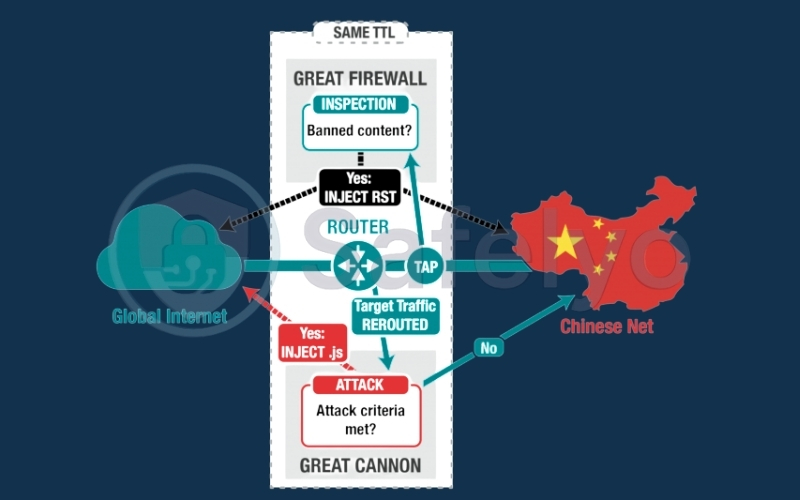
Before we get into the legal nitty-gritty, you need to understand what you are up against. The Great Firewall of China (GFW) isn’t just a simple website blocker; it is the most advanced internet censorship system on the planet. This is why even Gmail & Google Maps won’t load at the airport
Think of the GFW as a strict digital bouncer at the club. It checks your ID, checks your bag, and if it sees anything it doesn’t like – access denied. Technically, it uses methods like DNS poisoning and Deep Packet Inspection (DPI) to sniff out and block foreign data.
If you don’t have a VPN, here is a glimpse of what your phone will look like the moment you connect to hotel Wi-Fi:
- Social Media: No Facebook, Instagram, X (Twitter), TikTok (the international version), or Snapchat.
- Communication: No WhatsApp, Telegram, Signal, or LINE.
- Google Services: No Gmail, Google Maps, Google Drive, or YouTube.
- Information: No Wikipedia, Reddit, and most Western news outlets (BBC, NYT).
"Can't I just use Chinese apps?"
You could try. Locals use WeChat for everything from chatting to paying for dumplings. However, signing up usually requires a referral from an existing user, and the interface can be a hurdle if you don’t read Mandarin.
More importantly, these apps are monitored. If you want to access your home bank account or post a holiday selfie, a VPN isn’t a luxury – it is a necessity.
2. China’s VPN Laws: Are VPNs legal in China?
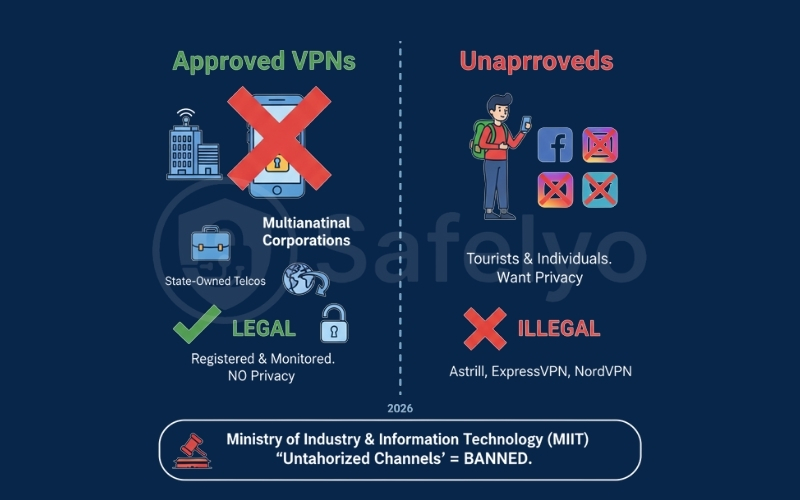
This is the part that makes travelers sweat. To understand if you are breaking the law, we have to look at who the law was written for. The regulation comes from China’s Ministry of Industry and Information Technology (MIIT), which stated that it is illegal to use “unauthorized channels” for international networking.
Here is the breakdown of the legal landscape in 2026:
2.1. Approved vs. Unapproved VPNs
There are technically “legal” VPNs in China. State-owned telecommunications companies can offer VPN services to multinational corporations.
- The Catch: These approved lines are registered with the government and, crucially, they are not private. They allow businesses to access data, but the government can inspect that traffic.
- For You: As a tourist who values privacy and wants to use Instagram, an “approved” VPN is useless. You are looking for “unapproved” consumer VPNs (like Astrill, ExpressVPN, or NordVPN).
2.2. Real-world enforcement: The risk hierarchy
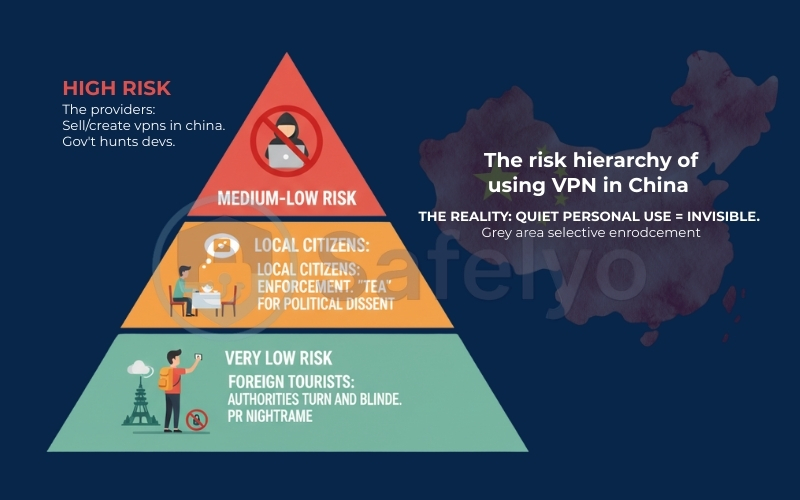
So, if you use an unapproved VPN, will the police knock on your hotel door? Let’s look at the fine for using a VPN in China through the lens of enforcement targets:
- The Providers (High Risk): The government aggressively hunts down people who sell or create VPNs within China. If you are a local developer coding a circumvention tool to sell on Taobao, you are in big trouble.
- Local Citizens (Medium-Low Risk): Enforcement against local users is sporadic. Occasionally, there are reports of locals being invited for “tea,” which is a euphemism for police questioning. They may also be fined for accessing banned sites, usually if they are using them to spread political dissent.
- Foreign Tourists (Very Low Risk): In my experience and based on years of expat reports, authorities generally turn a blind eye to foreigners.
- Why? China wants tourism and business. Arresting a tourist for checking Gmail would be a PR nightmare.
- The Reality: If you use a VPN quietly for personal use, you are essentially invisible. The police have bigger fish to fry than a backpacker watching Netflix.
Note: This does not mean it is 100% legal. It means it is a “grey area” where enforcement is extremely selective. To date, there are no verified reports of foreign tourists being jailed solely for personal VPN use.
3. The “golden rule”: Install BEFORE you go
If you only take one piece of advice from this entire guide, make it this one: Install your VPN software before you board your flight.
I cannot stress this enough. I have seen countless travelers land at Beijing Capital Airport, connect to the free Wi-Fi, and realize with horror that they cannot access the App Store or Google Play. Since the Great Firewall blocks the main websites of almost every major VPN provider (like ExpressVPN.com or NordVPN.com), you will be effectively stranded without tools.
Trying to download a VPN inside China is a headache you do not want to deal with on your holiday. It involves hunting for “mirror” sites that haven’t been blocked yet or asking friends back home to email you installation files.
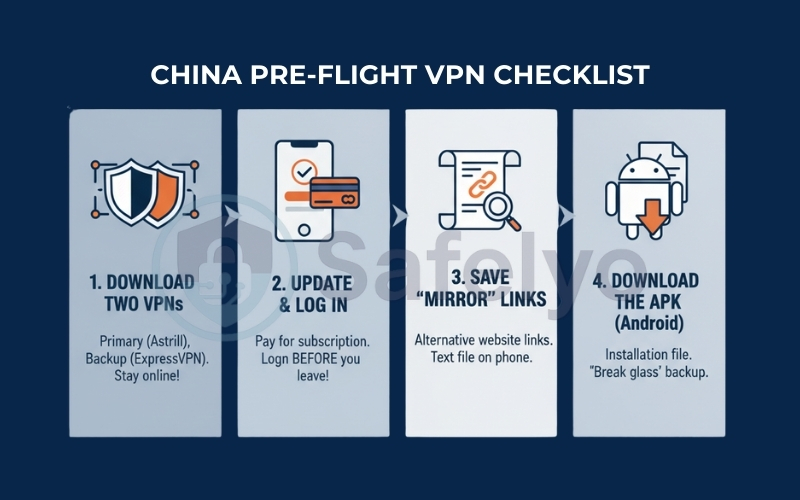
Your Pre-Flight Checklist
To ensure you are battle-ready, follow this exact protocol 24 hours before you leave:
- Download at least two VPNs: Do not rely on just one. The GFW is dynamic; what works today might be blocked tomorrow. Having a primary VPN (like Astrill) and a backup (like ExpressVPN) ensures you are never totally offline.
- Update and Log In: Downloading the app isn’t enough. Open it, pay for the subscription, and log in while you are still in your home country. Sometimes the login authentication servers are blocked, even if the VPN protocol itself works.
- Save “Mirror” Links: Most reputable VPNs provide alternative website links (e.g., a random string of numbers or a different domain) that work inside China. Save these links in a text file on your phone or write them down. You will need them if you need to contact support.
- Download the APK (Android Users): If you use Android, download the installation file (.apk) directly from the provider’s website and save it to your phone’s storage. This is your “break glass in case of emergency” backup.
| Action Item | Why is it critical | Done? |
| Download 2+ Apps | If one gets blocked, you have a backup (e.g., Astrill + ExpressVPN). | |
| Register & Pay | Payment gateways for VPNs are often blocked inside China. | |
| Log In & Test | Ensure the app authenticates correctly on your home Wi-Fi. | |
| Save Mirror Links | Save the “secret” unblocked support URL in your Notes app. | |
| Get the APK (Android) | Save the installation file to your phone storage just in case. |
4. Which VPNs actually work in China in 2026?
If you search Google, you will see generic “Top 10” lists pushing every provider under the sun. But the Great Firewall (GFW) is a sophisticated beast that uses Deep Packet Inspection (DPI) to identify and block standard VPN protocols. A VPN that is lightning fast in London might be completely dead in Beijing.
Based on current field tests and community feedback, only a few providers have the technology to bypass this inspection reliably. Here is why they work and who they are for.
Disclaimer: Performance can vary by city and ISP (China Mobile vs Unicom).
4.1. Astrill VPN
If you ask a long-term expat or foreign journalist living in Shanghai what they use, 8 out of 10 will say Astrill. It is the gold standard for stability.
- The Secret Sauce (StealthVPN & OpenWeb): Astrill doesn’t just use standard protocols. They built their own proprietary protocol called StealthVPN. This technology adds an extra layer of obfuscation (cloaking) that strips away VPN metadata, making your encrypted tunnel look exactly like regular HTTPS web traffic. The firewall sees “browsing”, not “tunneling”, so it lets you through.
- Smart Mode: This feature allows you to use Chinese apps (like WeChat or Baidu) with a local IP while simultaneously using the VPN for Instagram. This prevents local apps from lagging or blocking you for having a foreign IP.
- The Trade-off: It is the most expensive option (up to $30/month), and the interface feels dated. But for China, performance beats aesthetics.
Astrill VPN – The “Heavy Duty” Champion
The Reality Check: Is the $30 price tag really worth it for your trip? Read our unfiltered Astrill VPN Review to see why expats refuse to leave home without it.

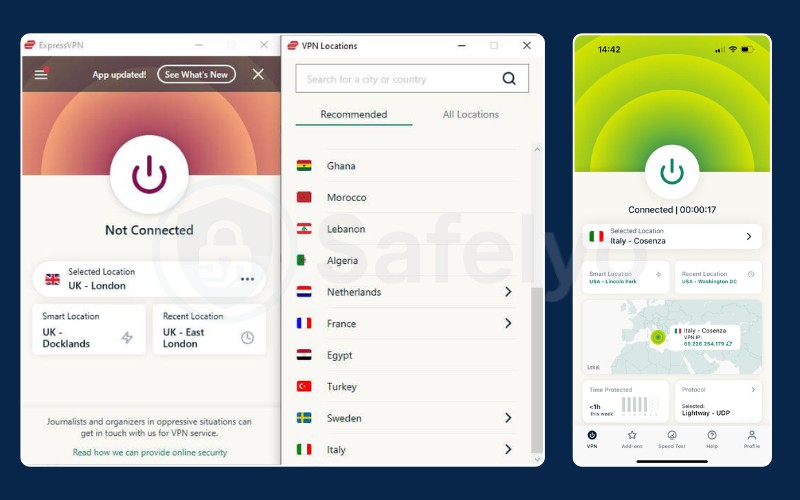
4.2. ExpressVPN
ExpressVPN is famous for being the easiest “click-and-go” option for tourists, but it requires a massive engineering effort behind the scenes to stay active in China.
- The Secret Sauce (Lightway Protocol): ExpressVPN uses its custom-built Lightway protocol. Unlike older protocols that are bloated with code, Lightway is lightweight and easier to disguise.
- Dynamic IP Rotation: The real strength of ExpressVPN is its server fleet. When Chinese censors identify and blacklist an ExpressVPN server IP (which happens often), their engineers instantly spin up new server IPs to replace them. It’s a constant game of “whack-a-mole”, and ExpressVPN is very fast at popping back up.
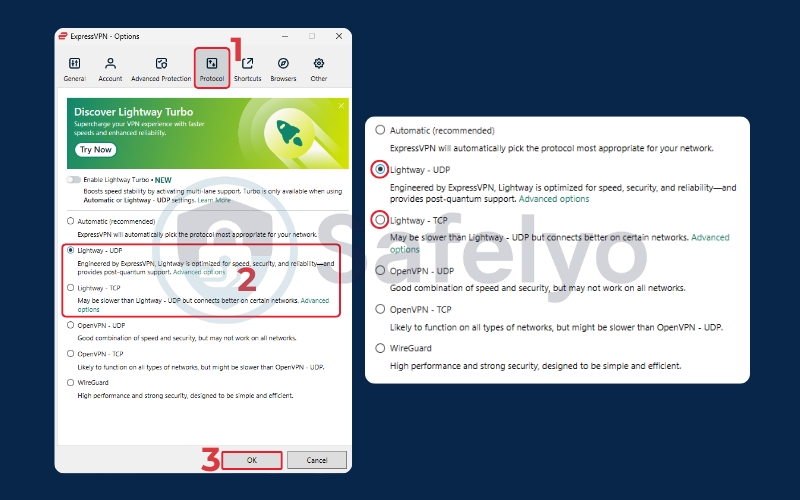
Note: You must set the protocol to “Automatic” or “Lightway” for the best chance of connecting.
ExpressVPN – The User-Friendly Choice
Traveler’s Verdict: Want a stress-free app that just works? Find out if this is the right travel companion for you in our full ExpressVPN Review.
4.3. LetsVPN
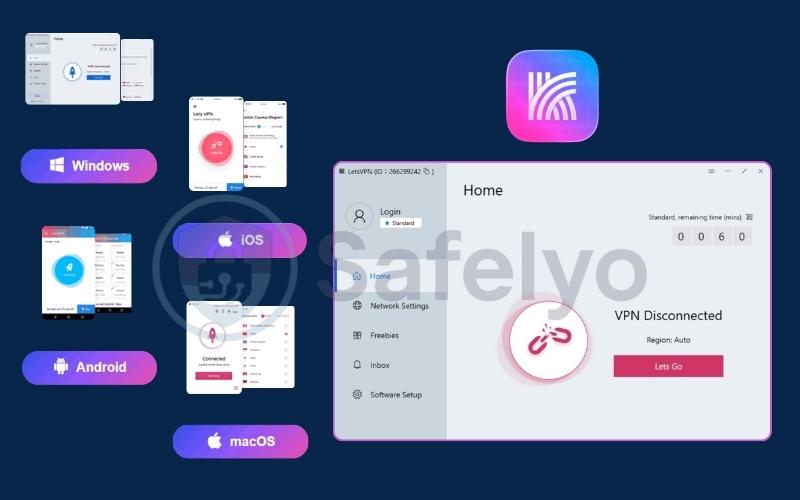
While unknown in the West, LetsVPN is exploding in popularity among students and travelers within China because it is built specifically for this environment.
- The Secret Sauce (V2Ray/Shadowsocks Implementation): While they keep their exact tech secret, LetsVPN operates similarly to a proxy chain rather than a traditional VPN tunnel. It analyzes the local network environment (China Unicom, Telecom, or Mobile) and routes your traffic through the most stable “node” at that specific moment.
- High Penetration: Because it focuses solely on bypassing blocks rather than heavy encryption features, it often connects instantly where giants like NordVPN might struggle to handshake.
LetsVPN – The Local “Hidden Gem”
Curious? See why this little-known app is silently beating the giants in our hands-on LetsVPN Review.
4.4. NordVPN
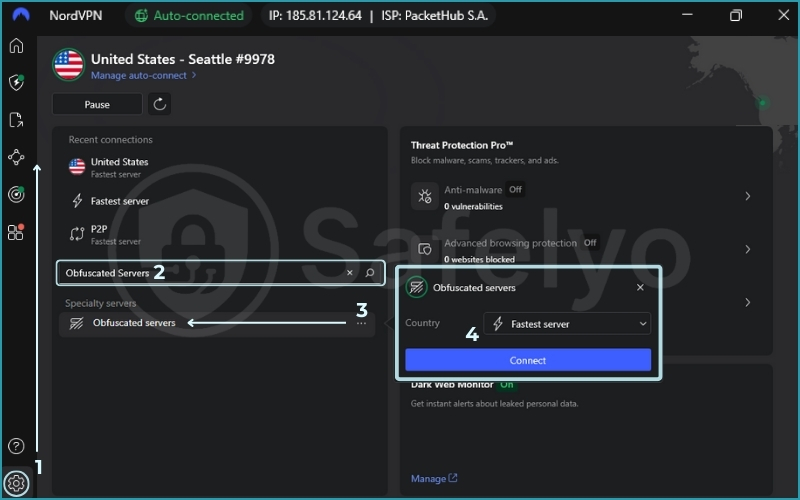
NordVPN is a powerhouse, but it does not work in China out of the box. You cannot just click “Quick Connect”.
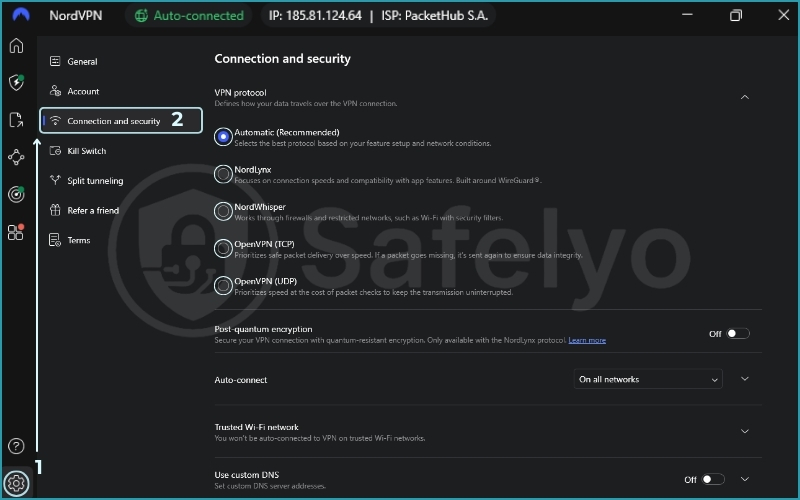
- The Secret Sauce (Obfuscated Servers): You must go into the settings and explicitly enable “Obfuscated Servers”. This forces the app to switch to a specialized OpenVPN TCP connection that mimics standard web browsing traffic.
- Why it works: Standard VPN traffic (UDP) is easy for the GFW to spot and drop. By wrapping data in SSL/TCP encryption (the same encryption used for secure banking websites), NordVPN tricks the firewall into thinking you are just browsing a secure webpage.
NordVPN – The “Configuration Required” Option
Don’t Get Stuck: Before you subscribe, learn exactly how to configure those “Obfuscated Servers” in our comprehensive NordVPN Review.
5. Backup options when VPN fails
Even the best VPNs can have a bad day. The Great Firewall is constantly updated, and sometimes it manages to block all VPN traffic for a few hours. If you need to access Google Maps to find your hotel or message your family, you need a backup plan that doesn’t rely on a VPN app.
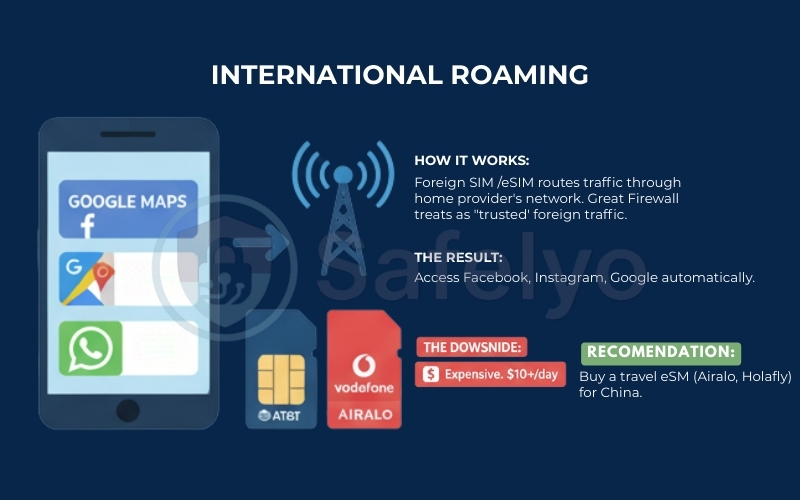
1. International Roaming (The Ultimate Lifeline)
This is the most reliable way to bypass censorship, and ironically, it doesn’t require a VPN at all.
- How it works: When you roam with a foreign SIM card, such as AT&T, Vodafone, or a travel eSIM, your internet traffic is routed back through your home provider’s network. This occurs before it hits the public internet. The Great Firewall treats this as “trusted” foreign traffic and generally lets it pass through unfiltered.
- The Result: You can access Facebook, Instagram, and Google automatically.
- The Downside: It is expensive. Using your home carrier’s roaming plan can cost $10/day or more.
Recommendation: Buy a travel eSIM (like Airalo or Holafly) specifically for China. It’s cheaper than carrier roaming but still bypasses the firewall.
2. Hong Kong / Macau SIM Cards
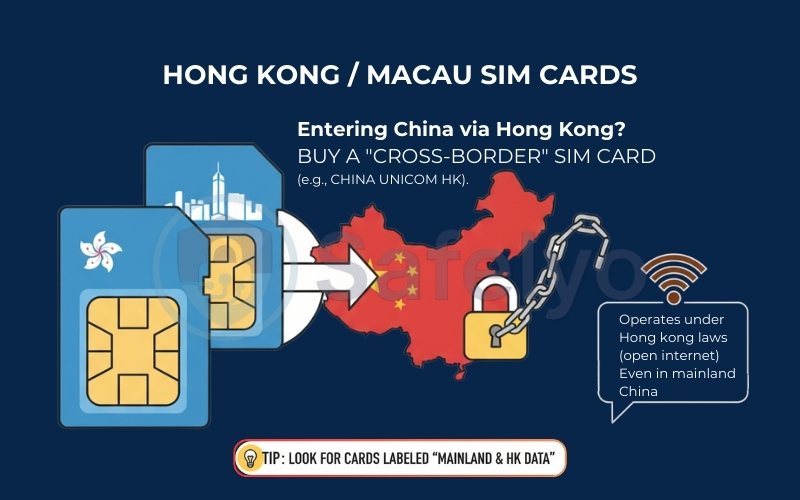
If you are entering China via Hong Kong, buy a “Cross-Border” SIM card (like China Unicom HK). These cards operate under Hong Kong laws (which have an open internet) even when you are physically in mainland China.
Tip: Look for cards labeled “Mainland & HK Data”.
6. High-risk situations & safety rules
For 99% of tourists visiting Beijing, Shanghai, or Xi’an, the “risk” is simply annoyance at slow internet. However, there are specific contexts where the legal “grey area” turns into a “danger zone”.
6.1. The Xinjiang anomaly
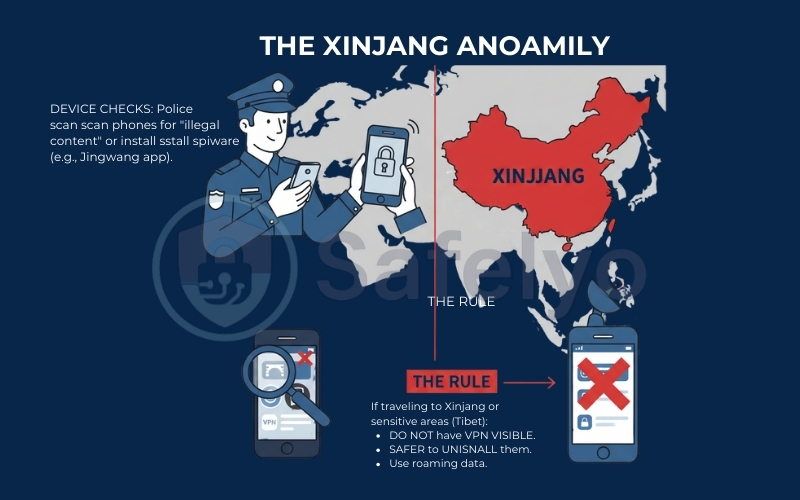
The autonomous region of Xinjiang (Western China) operates under extremely strict security measures that are totally different from the rest of the country.
- Device Checks: Police checkpoints are common. There are documented cases of authorities demanding tourists unlock their phones to scan for “illegal content” or forcing the installation of spyware apps (like Jingwang) to scan for banned files.
- The Rule: If you plan to travel to Xinjiang or sensitive border areas (like Tibet), do not have a VPN app visible on your phone. In fact, it is safer to uninstall them completely before entering the region and rely on roaming data.
6.2. Digital hygiene: How to stay low profile
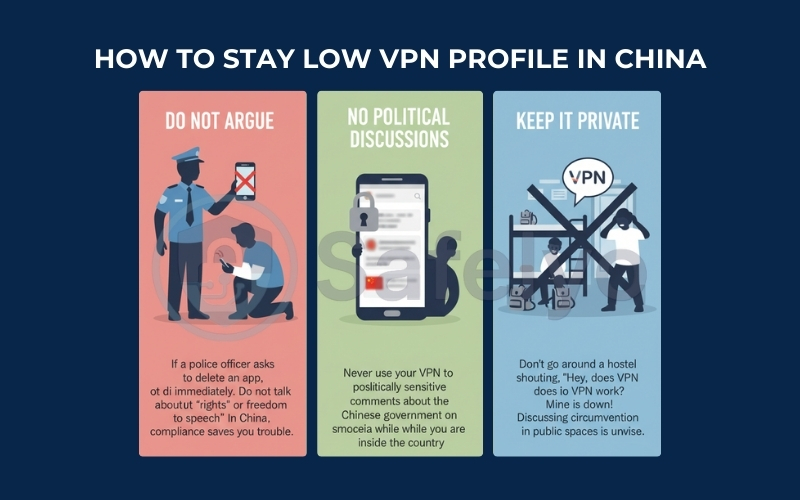
If you are just a regular tourist, you are unlikely to be stopped. But if you are, follow these safety protocols:
- Do not argue: If a police officer asks you to delete an app, do it immediately. Do not talk about “rights” or “freedom of speech”. In China, compliance saves you trouble.
- No political discussions: Never use your VPN to post politically sensitive comments about the Chinese government on social media while you are inside the country.
- Keep it private: Don’t go around a hostel shouting, “Hey, does your VPN work? Mine is down!” Discussing circumvention tools in public spaces is unwise.
7. Troubleshooting: When your VPN stops working
There is a moment of panic every traveler in China faces: You open your VPN, click connect, and… it spins forever. Don’t panic. This is normal. The Great Firewall is constantly learning, and sometimes it temporarily blocks specific VPN servers or protocols.
If you find yourself stuck offline, follow these four steps to punch through the wall again:
7.1. Change your protocol
If the server location is the “address”, the protocol is the “vehicle”. If the GFW blocks the vehicle, switch cars.
- For ExpressVPN: Switch from “Automatic” to Lightway – TCP. The TCP version is slightly slower but looks more like regular HTTPS web traffic, making it harder to block.
- For Astrill: Switch between OpenWeb (good for browsing) and StealthVPN (good for everything else).
- For NordVPN: Ensure you are using OpenVPN (TCP) with Obfuscated Servers. Avoid standard WireGuard or UDP, as they are easily spotted.
7.2. Hop around the map
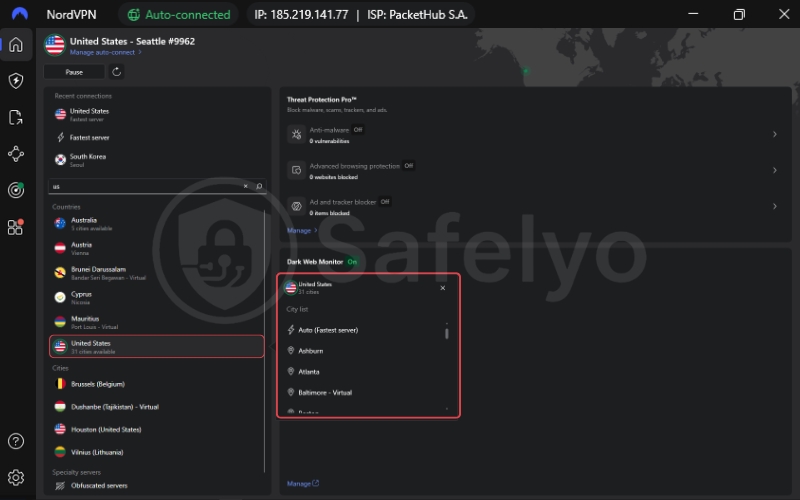
Don’t just stick to the “Hong Kong” or “USA – Los Angeles” servers. These are the most popular entry points and are often the first to be targeted by censors.
- Try the neighbors: Japan, Singapore, and South Korea often have good speeds.
- Try the unlikely ones: Sometimes, random servers in Seattle, Germany, or even Switzerland work perfectly because the censors aren’t paying as much attention to them.
7.3. Use the “Mirror” Links
If your VPN subscription expires or the app crashes and you need to reinstall it, you won’t be able to access the official website (e.g., expressvpn.com) to fix it.
Check that text file or note you saved before the trip (from the “Golden Rule” section). Use the mirror link (a secret, unblocked URL provided by the company) to reach customer support or download updates.
7.4. Wait it out
Sometimes, the block is political. During “sensitive periods” (like early June, the National Day in October, or major government meetings), China cranks up the firewall’s sensitivity.
The Reality: Your VPN might be down for 24-48 hours. No setting will fix it. This is when you switch to your backup eSIM or simply enjoy the offline world for a day.
8. FAQs about VPNs’ legality in China
Does WhatsApp work in China?
No, WhatsApp is completely blocked by the Great Firewall. You cannot send messages or make calls without a VPN. Most locals use WeChat (Weixin), but for you to stay in touch with friends back home, a VPN is the only way to keep using WhatsApp.
Can I use a free VPN in China?
I strongly advise against it. Free VPNs generally lack the sophisticated obfuscation technology needed to fool the Great Firewall. Furthermore, many free VPNs survive by selling user data, which defeats the purpose of privacy. In China, you get what you pay for.
Do I need a VPN in Hong Kong or Macau?
Technically, no. Hong Kong and Macau operate under different internet laws than mainland China. You can access Facebook, Google, and YouTube freely. However, due to increasing digital monitoring, Safelyo recommends using a VPN in these regions to protect your personal data, even if you don’t strictly need it to bypass blocks.
Is it safe to use hotel Wi-Fi?
Hotel Wi-Fi in China is monitored. While you likely won’t get in trouble for casual browsing, your traffic is visible to the ISP and potentially the authorities. Always turn on your VPN before you start browsing on public or hotel networks.
9. Conclusion
So, are VPNs legal in China? The answer remains a frustrating but manageable “grey area”. While unauthorized VPNs are technically against administrative regulations, the enforcement reality for 2026 shows that foreign tourists are rarely, if ever, targeted for personal use.
The real danger isn’t legal trouble – it’s being unprepared. The Great Firewall is ruthless to those who arrive without a plan. Remember the Golden Rule: download, install, and test your VPN before you board that plane.
At Safelyo, we believe your travel memories should be about the stunning landscapes and delicious food, not about struggling to open an email. Ready to become a digital ninja? If you want to master your privacy setup before your trip, explore our comprehensive VPN Guides for more tutorials, troubleshooting tips, and expert advice. Safe travels!