
The United States is often called the “land of the free.” Yet, paradoxically, it is also a core member of the Five Eyes intelligence-sharing alliance. Additionally, it is a market where ISPs may be permitted to collect and monetize certain browsing data, depending on applicable rules and provider policies.
Whether you live in the States and want to stop ISP throttling, or you are traveling abroad, a best VPN for USA is often the most practical tool. It helps you obtain a US IP address to unblock Netflix and Hulu. It enhances online privacy, helps bypass restrictions on geo-restricted content, and allows access to US-only services.
If you are looking for quick answers on finding the best VPN for the US market, here is the bottom line:
- What is the best VPN for the USA?
→ NordVPN takes the top spot for speed and privacy, while Surfshark offers the best value. - How do I bypass sports blackouts?
→ You need a VPN with servers in all 50 states, specifically Private Internet Access (PIA). - Is using a VPN legal in the US?
→ Yes. Using a VPN is legal in the United States for privacy and security purposes, but it does not make illegal activity legal. - Should I avoid US-based VPNs?
→ Not necessarily, provided they have a strict zero-logs framework supported by independent audits, transparency reporting, or a credible legal track record. - Can free VPNs unblock US Netflix?
→ Generally no. Free VPNs are often unreliable for streaming; you need a premium service to bypass geo-blocks.
To help you navigate this crowded market, I evaluated a broad set of leading VPN services in hands-on tests to identify the strongest options for the US market in 2026. Here are the top performers that offer the perfect balance of internet security, speed, and access to premium streaming services right now.
Quick summary: Top 5 VPNs for the US Market
| Category | Recommended VPN | Key reason (USA-specific) |
| Best Overall | NordVPN | Among the fastest speeds I measured on US servers (NordLynx) plus an offshore jurisdiction. |
| Best for 50 States | Private Internet Access (PIA) | Among the fastest speeds I measured on US servers (NordLynx), plus an offshore jurisdiction. |
| Best Value | Surfshark | Among the fastest speeds I measured on US servers (NordLynx), plus an offshore jurisdiction. |
| Best User Experience | ExpressVPN | Highly reliable, polished app, and consistent unblocking. |
| Best Free Option | Proton VPN | A well-regarded free tier with no strict data caps for basic use, plus a strong privacy focus. |
Disclaimer
At Safelyo, our reviews are based on real-world testing and human expertise. We may earn a small commission if you purchase through our links, at no extra cost to you. This supports our lab but does not influence our rankings.
1. Why you need a VPN for the USA (the hidden risks)
Many users think a VPN is just a tool to unblock movies, but in the United States, it is a critical defense mechanism. The digital landscape in the US can be challenging for user privacy, depending on your ISP, state, and online activities.
1.1. The “5 Eyes” & mass surveillance
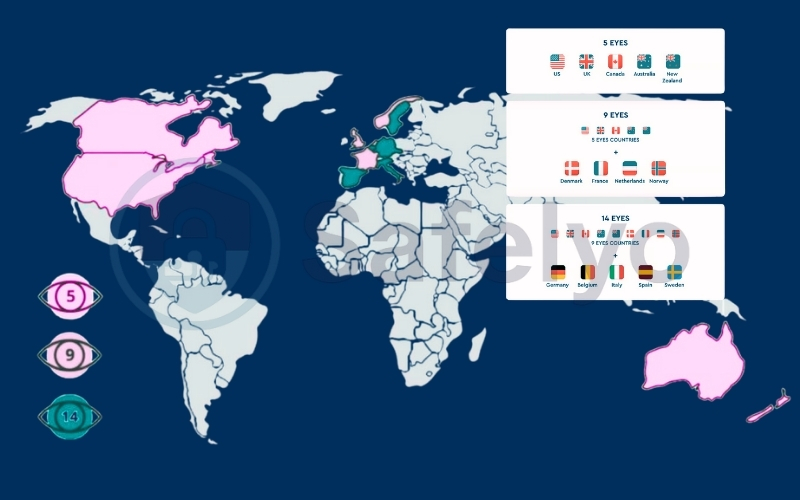
The United States is a founding member of the Five Eyes Alliance, which includes the UK, Canada, Australia, and New Zealand. This is an intelligence-sharing partnership where member countries cooperate on corporate surveillance and government signals intelligence. If a VPN operates under US jurisdiction, it may face legally binding data requests, sometimes with limits on what it can disclose publicly. That’s why an independently verified no-logs approach (and a minimal-data design) matters.
1.2. ISP throttling & data selling
In many parts of the world, privacy is a right. In the US, your browsing history is a commodity. Following changes to privacy rules over time, major Internet Service Providers may be able to collect and monetize certain customer data, depending on applicable regulations and their own policies.
Furthermore, some ISPs may impose a hidden bandwidth limit or reduce speeds during high-bandwidth activities – especially at peak times or under network congestion.
1.3. Streaming & Sports Blackouts
If you are a sports fan living in the US, you are likely familiar with the frustration of “blackout restrictions”. Major leagues and broadcasters can restrict local games on streaming services due to licensing rules.
In many cases, using a VPN to connect via a different state can help, but results can vary by platform policies and how aggressively they enforce location checks. For those outside the US, acquiring a US IP address via a VPN is one of the most reliable ways to access US-only libraries when you’re outside the country. However, success can vary as platforms update their detection methods.
2. Should you avoid VPNs based in the United States?
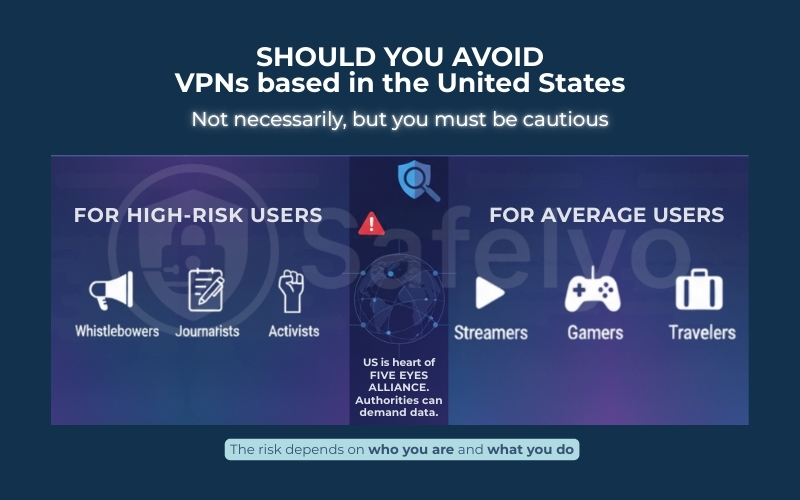
This is one of the most common questions I get asked, and the answer is: Not necessarily, but you must be cautious.
Because the US is the heart of the Five Eyes Alliance, US authorities can issue legally binding requests for certain types of data from companies operating under US jurisdiction. However, the risk depends entirely on who you are and what you do.
For High-Risk Users
(Whistleblowers, Journalists, Activists)
If your threat model requires the highest possible level of anonymity and minimized legal exposure, I strongly recommend avoiding US-based providers. You are better off with a VPN operating in a favorable privacy jurisdiction, like Panama (NordVPN) or the British Virgin Islands (ExpressVPN). In these locations, US legal orders are generally harder to enforce directly and may require additional cross-border legal processes.
For Average Users
(Streamers, Gamers, Travelers)
If your main goal is to get a US IP address for streaming or to stop your ISP from throttling your connection, a US-based VPN is perfectly fine. This is true if it has a strict zero-logs policy. For example, Private Internet Access (PIA) is based in the US, but its “No-Logs” policy has been tested in court multiple times. The FBI requested data, and PIA had absolutely nothing to hand over.
Red flags: When to run away from a US VPN
Even for average users, not all US VPNs are safe. If you see these warning signs, avoid the service immediately:
- No Independent Audit: If they claim “No-Logs” but haven’t hired a firm like Deloitte or PwC to verify it, do not trust them.
- Vague Privacy Policy: Avoid providers whose policy includes phrases like “we may collect data to improve user experience” or “we share data with partners”.
- No RAM-Only Servers: In the US, hardware matters. Look for providers using RAM-only (diskless) servers. Unlike traditional hard drives, these RAM-only (diskless) servers are designed so that data is not stored persistently. After a reboot, there is typically far less residual information than with traditional disk-based setups.
In short: Jurisdiction matters, but a proven track record matters more.
3. How we tested the best VPN for USA
At Safelyo, transparency is our priority. We don’t just aggregate specs from marketing materials. We put every service through a stress test. To ensure these recommendations hold up for the current market, I conducted a fresh round of testing in January 2026.
>> Read more to see: How we test and review VPNs
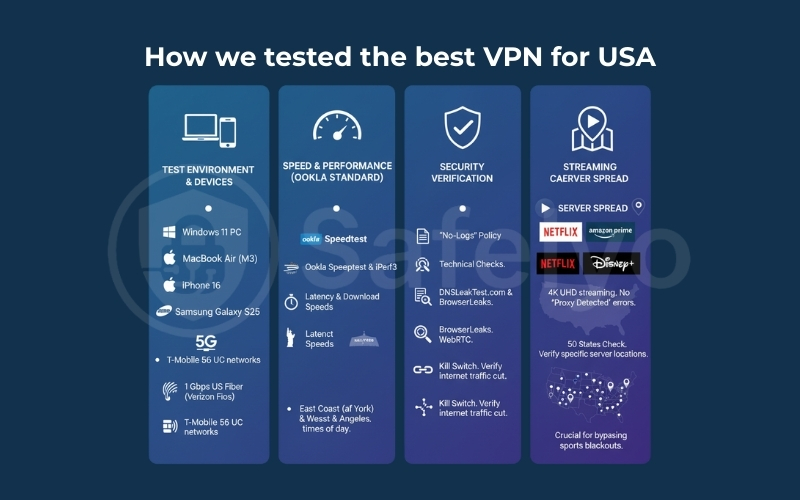
Here is the exact performance testing bench and methodology used to rank these providers:
Test environment & devices
Testing was performed across a Windows 11 PC, MacBook Air (M3), iPhone 16, and Samsung Galaxy S25 to ensure app consistency across ecosystems.
A baseline 1 Gbps US Fiber connection (Verizon Fios) was used for desktop testing, while mobile apps were tested on T-Mobile 5G UC networks to simulate real-world travel scenarios.
Speed & performance (The Ookla Standard)
I used Ookla Speedtest and iPerf3 to measure latency and download speeds.
Tests were run from both the East Coast (New York) and the West Coast (Los Angeles) at different times of day to account for network congestion.
Security verification
I treated “No-Logs” as a claim that must be supported by technical checks (leak tests) and provider transparency signals. I verified the effectiveness of the DNS leaks protection by using DNSLeakTest.com and BrowserLeaks to ensure WebRTC wasn’t exposing my real IP address.
I also analyzed the connection logs to verify that the Kill Switch successfully cut internet traffic when the VPN connection was manually disrupted.
Streaming capability
I logged into paid accounts for Netflix, Hulu, Amazon Prime Video, and Disney+ using US servers. A VPN was scored higher when it could reliably stream in 4K UHD without repeated “Proxy Detected” errors during testing.
Server Spread (50 States Check)
I manually verified specific server locations in key states to confirm coverage claims, specifically checking for servers in “flyover states” which are crucial for bypassing sports blackouts.
4. Detailed reviews: Top best VPN for USA in 2026
After extensively testing over 40 providers, I evaluated them against strict criteria. This included US surveillance laws, streaming blocks, and connection speeds. Here are my top recommendations for the best VPN for the USA.
4.1. NordVPN
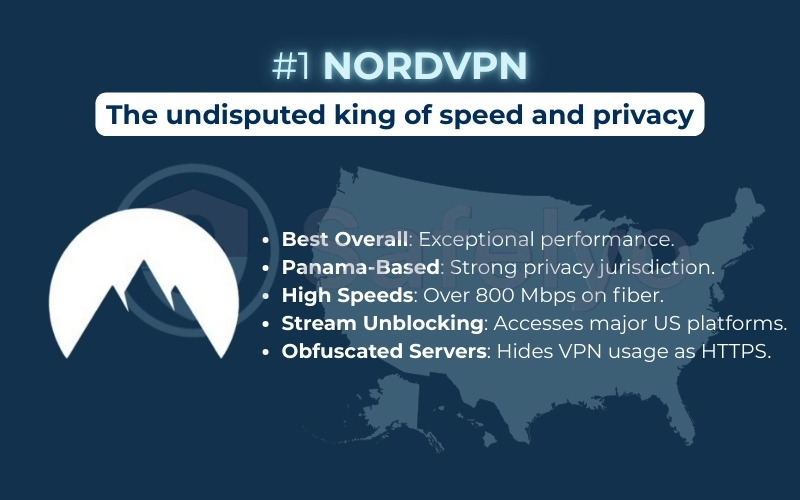
If you want a VPN that does everything perfectly, NordVPN is my top pick. What sets it apart for US users is its favorable privacy jurisdiction. NordVPN is based in Panama, a privacy-friendly country outside the Five Eyes Alliance. This reduces direct US jurisdictional leverage and can make compelled disclosure more difficult compared with a US-based provider.
PROS
- Consistently strong performance on US servers, suitable for 4K streaming and gaming.
- Based in Panama, which helps reduce exposure to US jurisdiction.
- Reliable access to major US streaming platforms in most tests.
- Broad security feature set, including Kill Switch and Double VPN.
CONS
- The desktop map interface may feel slightly laggy on some systems.
- Higher upfront price without long-term discounts.
- Limited low-level network customization for advanced users.
- Interface may feel feature-heavy for beginners.
Why it’s great for the USA:
- Blazing Fast Speeds: On a 1 Gbps fiber line, NordVPN’s NordLynx reached very high throughput in my tests, with peak results exceeding 800 Mbps on certain US endpoints. (Results will vary by ISP, distance, and available server locations.)
- Unblocking Power: In my testing, it reliably accessed major US streaming platforms with minimal proxy-detection issues.
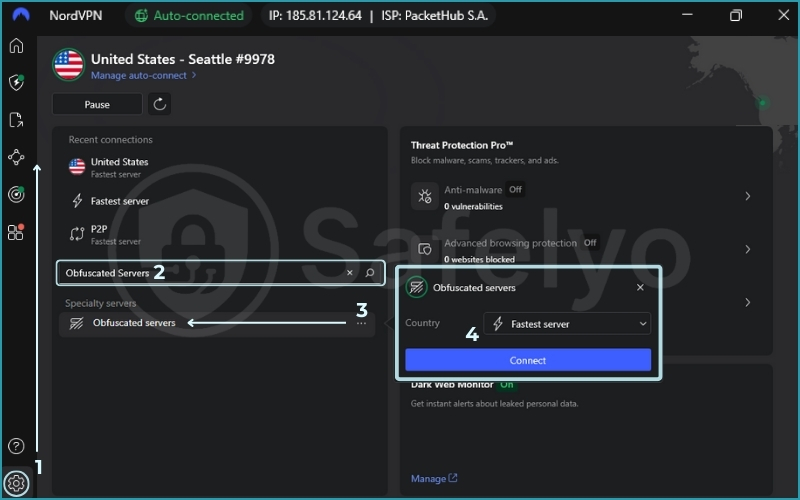
- Obfuscated Servers: This feature uses obfuscation to disguise your VPN traffic as regular HTTPS traffic, allowing you to unblock platforms like Amazon Prime Video and Disney+ without ISPs detecting your VPN usage.
NordVPN – Best overall VPN for the USA
- Verdict: The undisputed king of speed and privacy.
- Best for: Maximum privacy seekers & binge-watchers needing reliable Netflix US access.
4.2. Surfshark
Surfshark proves you don’t need to spend a fortune for premium protection. Its standout feature is unlimited simultaneous connections. It even includes SmartDNS for devices that don’t support native apps. This means you can protect every device in your household with just one subscription. If you have any more paragraphs to break down or need further assistance, feel free to ask!
PROS
- Unlimited simultaneous connections on one account.
- Competitive pricing for a premium VPN.
- Works well with popular US streaming services.
- Clean, beginner-friendly apps across devices.
CONS
- US speeds can fluctuate during peak hours.
- Fewer advanced configuration options.
- Live chat support response times may vary.
- Fewer US city locations than PIA.
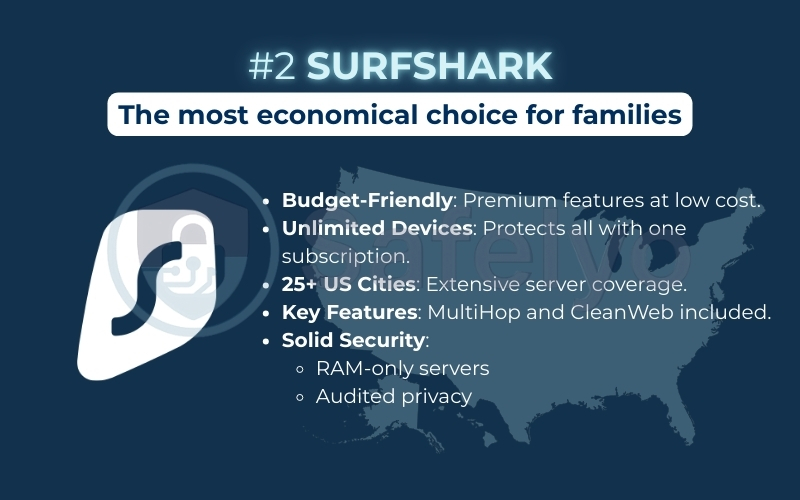
Why it’s great for the USA:
- Extensive US Coverage: With servers in 25+ major US cities, finding fast, nearby server locations is effortless.
- Aggressive Pricing: It offers top-tier features like MultiHop (Double VPN) and CleanWeb (ad-blocker) at a fraction of the cost of competitors.
- Audited Security: Despite its low price, Surfshark doesn’t cut corners. It runs on RAM-only servers (no hard drive data storage) and has a strictly audited privacy policy.
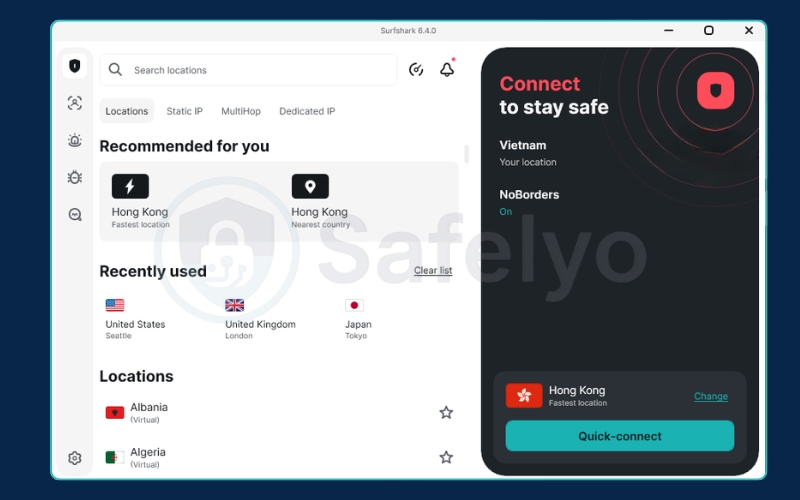
Surfshark – Best value & unlimited devices
- Verdict: The most economical choice for families.
- Best for: Large families & budget-conscious users who want premium features.
4.3. Private Internet Access (PIA)
Private Internet Access (PIA) offers something no other major competitor does: It has physical servers in all 50 US states. If you need a US IP address specifically from Idaho, Kansas, or the Dakotas to access local Hulu content, PIA is your only reliable option.
PROS
- Server coverage across all 50 US states.
- Ideal for sports blackouts and state-specific access.
- Highly customizable security and protocol settings.
- Good long-term pricing options.
CONS
- A US-based jurisdiction may concern privacy-focused users.
- The interface may appear technical for first-time users.
- Streaming access can be inconsistent on some servers.
- Not always the fastest option.
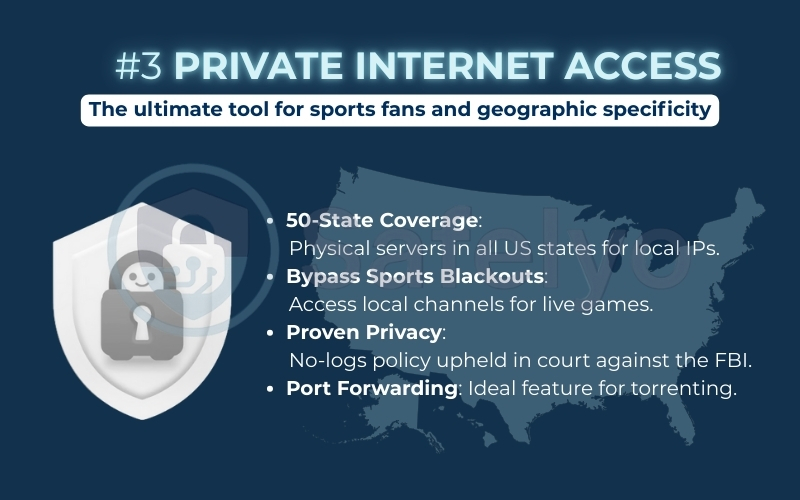
Why it’s great for the USA:
- Bypassing Sports Blackouts: This 50-state coverage is a game-changer for NFL, NBA, and MLB fans. If a game is blacked out in your local area, you can simply hop to a server in a neighboring state to watch it live.
- Court-Proven Privacy: PIA is based in the US (which usually raises eyebrows), but they have turned this into a strength. Their “No-Logs” policy has been tested in court twice. The FBI subpoenaed data, and PIA proved they had absolutely nothing to share.
- Port Forwarding: A rare feature that makes PIA a favorite for torrenting.
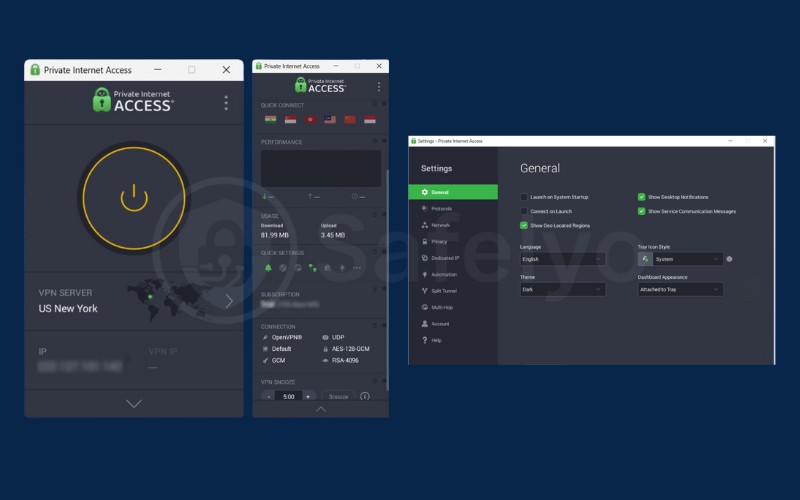
Private Internet Access (PIA) – Best for 50-State Coverage
- Verdict: The ultimate tool for sports fans and geographic specificity.
- Best for: Sports enthusiasts facing blackout restrictions & specific state IP needs.
4.4. ExpressVPN
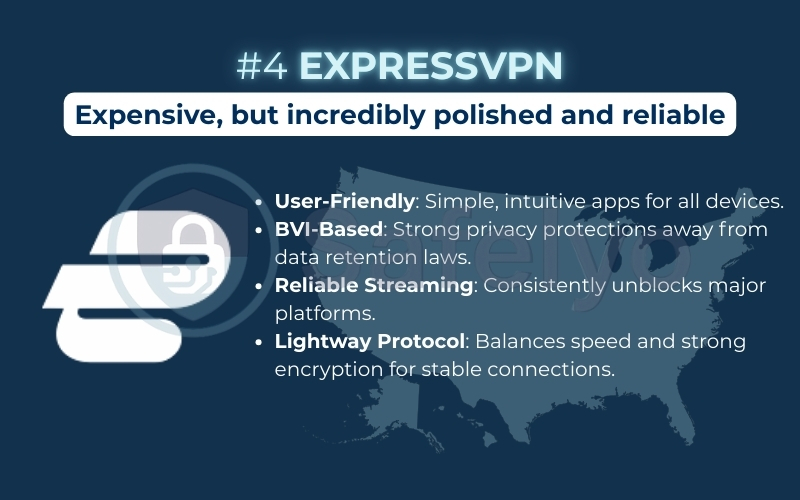
If you are not “tech-savvy” and just want user-friendly apps that work instantly with high streaming compatibility, ExpressVPN is the answer. It is based in the British Virgin Islands (BVI) – another safe haven from US and EU data retention laws.
PROS
- Extremely easy-to-use apps with minimal setup.
- Stable connections to major US streaming platforms.
- Based in the British Virgin Islands, outside US jurisdiction.
- Strong performance across mobile, desktop, and smart TVs.
CONS
- Higher price compared to most competitors.
- Limited advanced configuration options.
- No detailed breakdown of servers by US state.
- Less cost-effective for budget users.
Why it’s great for the USA:
- Plug-and-Play Simplicity: The app is intuitive and clean. Whether on a laptop or a Smart TV, it connects in seconds.
- Consistent Streaming: In my testing, ExpressVPN was the most consistent at unblocking streaming platforms. It tends to stay reliable for streaming because its US IP pool is actively maintained and refreshed over time.
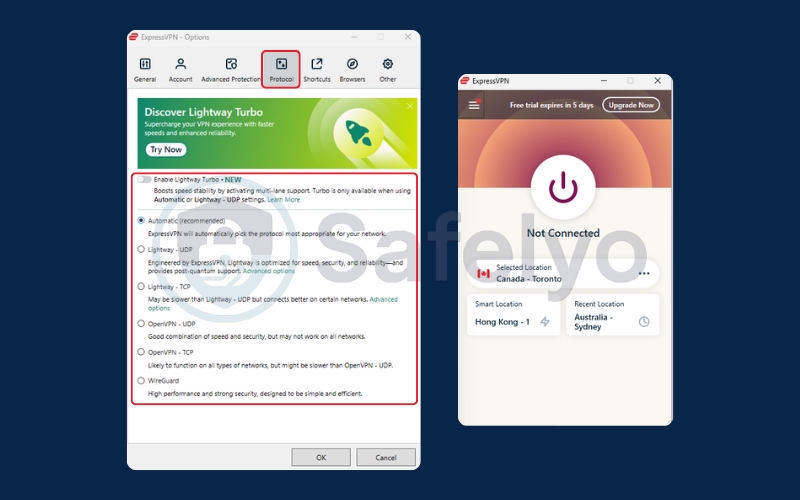
- Lightway Protocol: Their proprietary protocol offers a fantastic balance of strong encryption and speed, ensuring your connection never drops during critical moments.
ExpressVPN – Best for ease of use
- Verdict: Expensive, but incredibly polished and reliable.
- Best for: Non-tech users, travelers, and those who want a premium experience on Smart TVs.
4.5. Proton VPN
Many free VPNs rely on alternative monetization models, such as ads or data collection, which can create privacy and performance trade-offs. Proton VPN is the exception. Built by the team behind Proton’s privacy-focused products, Proton VPN is designed with a strong emphasis on security and user privacy.
PROS
- Free plan includes access to US servers.
- No strict data caps on the free tier.
- Strong privacy-focused brand reputation.
- Suitable for basic browsing and privacy needs.
CONS
- The free plan does not support streaming.
- Speeds on the free plan are average.
- Limited to one device on the free plan.
- Fewer server location options.
Why it’s great for the USA:
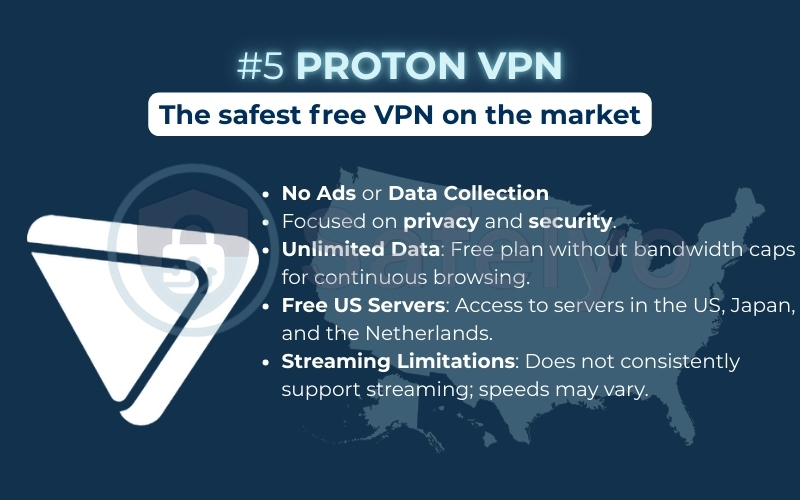
- Unlimited Data: Unlike almost every other free VPN that caps you at 500MB or 10GB, Proton VPN offers a free plan. This plan is suitable for ongoing browsing because it has no bandwidth limit or strict data caps, though it may not consistently work with Netflix. However, speeds can vary at peak times. You can browse as much as you want.
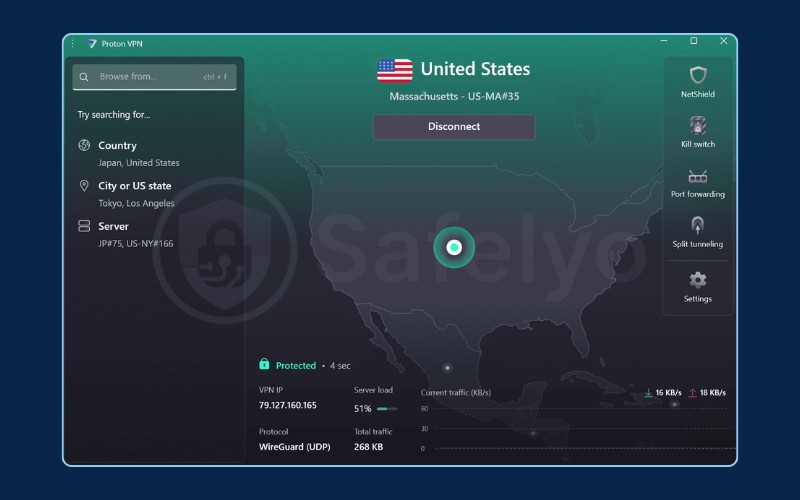
- Free US Servers: You get access to free servers in the US (along with Japan and the Netherlands).
- Limitations: It is crucial to note that the free version does not support streaming. Netflix may block it, and streaming results are not guaranteed on the free tier. Additionally, internet speeds can be slower during peak hours due to server congestion.
Proton VPN – Best Free VPN for USA
- Verdict: The safest free VPN on the market.
- Best for: Students, activists, and anyone needing basic privacy on a strict budget.
5. Best VPN for the USA by use case
Choosing the right VPN often comes down to your primary activity. A streamer needs raw speed to avoid buffering, while a torrent user prioritizes technical features like port forwarding. To save you time reading through endless specs, I have broken down the top performers by their specific strengths.
If you have a specific goal in mind, here is the cheat sheet:
| Why is it the winner | Recommended VPN | Why is it the winner |
| Streaming (Netflix US, Hulu) | NordVPN | Often performs well across multiple Netflix libraries in testing, with strong speeds via NordLynx. |
| Torrenting & P2P | Private Internet Access (PIA) | Supports Port Forwarding (essential for faster seeding) and has a proven no-logs policy. |
| NFL / NBA Blackouts | Private Internet Access (PIA) | One of the few major providers offering 50-state coverage, enabling state-to-state switching for blackout workarounds. |
| Maximum Privacy | NordVPN / ExpressVPN | Both are based offshore (Panama & BVI), reducing direct exposure to US jurisdiction compared with a US-based provider. |
| Budget Friendly | Surfshark | Best price-to-performance ratio with unlimited device connections. |
Expert Tip: If you are a die-hard sports fan living in a state with strict blackout rules, such as California or New York, PIA is your best bet. It allows you to get an IP address from a neighboring state where the game is being broadcast. For everyone else, NordVPN offers the best balance.
6. Buying guide: How to choose the right US VPN
With hundreds of VPNs claiming to be the “fastest” or “most secure”, picking the right one for the US market can be overwhelming. Through my years of testing, I’ve found that essential features like DNS leak protection distinguish a mediocre VPN from a great one.
Here is a quick US VPN buying checklist to help you verify your choice before subscribing:
| Feature | What to look for |
| Jurisdiction | Based outside 5 Eyes (e.g., Panama, BVI) OR has a court-proven No-Logs policy. |
| Server Choice | Allows you to select specific server locations (e.g., “US – New York”), not just a generic “USA” region. |
| Streaming | Explicitly claims to unblock Netflix, Hulu, Amazon Prime Video, and Disney+, or offers Smart DNS. |
| Speed Protocol | Supports WireGuard or modern equivalents (NordLynx, Lightway) for robust encryption and low latency. |
| Guarantee | Offers a risk-free 30-day money-back guarantee (avoid services with no refund policy). |
Jurisdiction & Privacy Laws
This is your first checkpoint. Since the US is the heart of the Five Eyes Alliance, you must carefully consider privacy jurisdiction, as a VPN based in the US falls under local laws.
For maximum privacy, prioritize providers based “offshore” in privacy-friendly regions like Panama (NordVPN) or the British Virgin Islands (ExpressVPN). If you choose a US-based provider, ensure they have a third-party audit or a court-proven track record, like PIA. This increases confidence that they will minimize or avoid retaining activity logs.
City-Level Server Selection
The United States is geographically massive. Connecting to a New York server while you are in Los Angeles will result in high latency (ping), which ruins online gaming and video calls.
The best reliable VPN for the USA shouldn’t just offer a “US” button; it needs to let you select specific cities to get a precise US IP address. It should let you pick specific cities (e.g., Miami, Denver, Chicago). This allows you to connect to a server physically closest to you for the best speed.
Explicit Streaming Support
Netflix, Hulu, and Disney+ are constantly upgrading their technology to detect and block VPN traffic. Don’t assume a VPN will work with these services just because it has US servers. Look for explicit streaming support signals and a history of reliability. If they don’t mention Netflix on their homepage, they likely can’t unblock it.
7. How to get a US IP address (Step-by-Step)
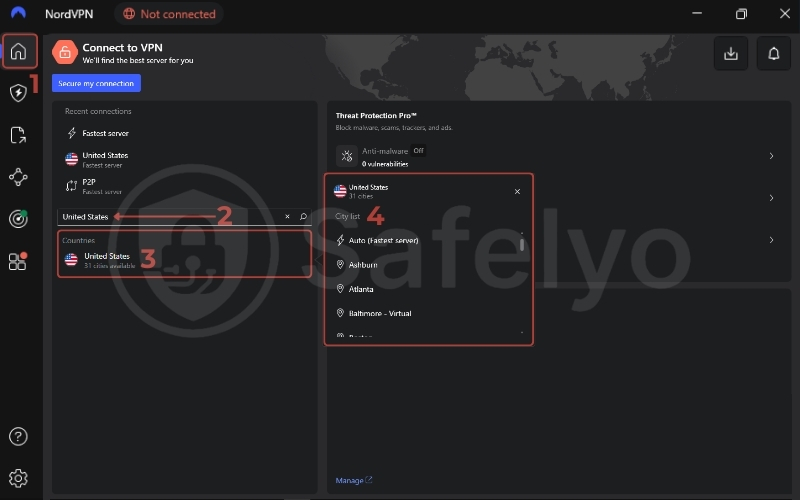
Getting a US IP address is surprisingly simple, whether you are a traveler wanting to access your home banking or a streamer looking to unlock US Netflix libraries. You don’t need to be a tech wizard; just follow these three quick steps:
- Download and install the VPN: Sign up for a reputable service (like NordVPN or PIA) and download the app for your device. Avoid many sketchy free VPN services or proxies, as they can be unreliable and may expose identifying metadata or your real location.
- Open the Server List: Launch the app and log in. In the search bar or map view, type “United States” or look for the US flag.
- Select your location & connect: Click the connect button; within seconds, your internet traffic will be secured with military-grade encryption, and websites will see you as a user located in the USA.
Pro tip for better performance
- For sports blackouts: If you need to watch a game blocked in your area, manually select a specific server in a different state where the game is being broadcast.
- For speed: If you just need privacy, let the VPN “Quick Connect”. It will automatically pick the server closest to your physical location (e.g., the nearest city) to minimize lag.
8. FAQs about the best VPNs for the USA
With so much conflicting information online about surveillance laws and streaming blocks, here are concise answers to the most pressing questions. These are the questions users commonly ask about using VPNs in the United States.
Is using a VPN legal in the USA?
Yes, using a VPN is legal in the United States. However, it does not exempt you from complying with applicable laws or platform terms. While some countries restrict VPN usage, the US has no laws against protecting your privacy. However, please remember that using a VPN to commit illegal acts (such as downloading copyrighted materials or hacking) remains illegal. For maximum safety, use a paid VPN with a reliable kill switch and 24/7 customer support to resolve any connection issues.
What is the best VPN to use in the USA?
Based on our extensive testing across speed, privacy, and unblocking capabilities, NordVPN is the best VPN to use in the USA overall. It offers the perfect balance of Panama-based privacy (outside 5 Eyes jurisdiction) and blazing-fast NordLynx speeds for streaming. For budget-conscious users, Surfshark is a close runner-up.
Which VPN has all the US states?
Private Internet Access (PIA) is one of the best-known providers for 50-state coverage. Availability includes diverse server locations that help with blackout workarounds. This makes it a unique solution for sports fans who need to bypass local MLB, NBA, or NFL blackout restrictions by connecting to a specific neighboring state.
What is the best VPN to change location to the US?
If you are looking for the best VPN to change location to the US to access banking or streaming services from abroad, ExpressVPN and NordVPN are the top choices. They both offer massive server networks that refresh IP addresses frequently, ensuring you can bypass geo-blocks without being detected.
What is the best free VPN for the USA location?
The best free VPN for the USA location is undoubtedly Proton VPN. Unlike almost any other free VPN that might sell your data or limit your bandwidth, Proton offers unlimited data and a strict no-logs claim. However, keep in mind that the free version does not support streaming (Netflix will likely block it), and speeds may be slower than paid versions.
Can I watch US Netflix abroad with a free VPN?
It can be difficult. Netflix actively detects and blocks many VPN endpoints, especially on free plans with smaller IP pools. To reliably watch US Netflix, Hulu, or HBO Max from abroad, you need a premium service. Options like NordVPN or ExpressVPN invest in obfuscated servers and regularly update their IP pools.
9. Conclusion
The United States is arguably the most competitive and complex market for digital privacy. Between the surveillance risks of the Five Eyes Alliance and the frustrating blackout restrictions on streaming content, a reliable VPN can be a practical upgrade. It enhances privacy, ensures performance consistency, and unlocks a wide range of geo-restricted content.
If you are looking for the ultimate all-rounder that balances elite speed, proven privacy, and unblocking power, NordVPN remains the #1 recommendation from Safelyo for 2026. However, if your priority is specific geographic coverage for sports, Private Internet Access (PIA) and its 50-state network is unbeaten.
Don’t leave your personal data exposed to ISPs and advertisers. Secure your connection today with the best in our Best VPN category.