

At Safelyo, our mission is straightforward but ambitious: to help you reclaim your digital privacy with accurate, unbiased, and data-driven advice.
We understand that the VPN market is saturated with aggressive marketing, confusing technical jargon, and paid endorsements.
That is why we refuse to rely on press releases or surface-level observations. Instead, we operate a rigorous testing methodology where every VPN is put through real-world scenarios by human experts.
We buy our own subscriptions, run our own benchmarks, and challenge every claim a provider makes.
Below, you will find a comprehensive breakdown of exactly how we test, score, and review VPNs to ensure you get the truth.
1. Why You Should Trust Safelyo’s Reviews
Trust is the currency of the cybersecurity industry, and we strive to earn yours through complete transparency and editorial integrity. We have built our reputation on a foundation of rigorous testing and an unwavering commitment to the truth. Here is a detailed look at how we maintain our high standards:
1.1. 100% Editorial independence
We maintain a rigid “church and state” separation between our editorial team and our commercial operations. This means our researchers and writers operate without knowledge of specific partnership deals, and our commercial partners have absolutely zero input on our content.
A VPN provider cannot purchase a “Seal of Approval,” pay to alter a test score, or buy a higher ranking on our lists. Our evaluations are based solely on the technical performance, security auditing, and usability data collected during our testing process. Our loyalty is strictly to the user, not the software developers.
1.2. We buy our own subscriptions
We purchase plans anonymously using our own budget and personal payment methods. This allows us to experience the entire customer journey exactly as you would—from the ease of the checkout process and the difficulty of installation to the responsiveness of customer support and the reliability of their money-back guarantee.
1.3. Human testing
Our reviews are researched, tested, and written by real cybersecurity enthusiasts, technical writers, and privacy advocates. We do not use AI to generate review content or fabricate test results. Every speed test, leak check, and streaming attempt is performed manually by a human expert.
This rigorous process is led by our core team, who hold relevant cybersecurity certifications and possess solid knowledge of network security and data privacy. Here is a brief introduction to our authors:
- Millie Bobby: With training in network security and VPN operations from Cisco and Microsoft, Millie conducts thorough product evaluations. She combines technical understanding with practical testing to deliver complete and reliable VPN reviews.
- Eleanor Vance: Holding a Google Cybersecurity Certificate, Eleanor applies a structured approach to testing. She utilizes her technical background to perform end-to-end evaluations of VPN services, ensuring every aspect of the software is tested and analyzed.
- Elysia Quinn: Drawing on her training in security risk management and strong analytical skills, Elysia researches and tests VPN providers extensively. She is dedicated to producing well-rounded reviews that provide users with a clear and accurate picture of each service.
1.4. Transparency on revenue
Safelyo is an open book regarding how we fund our operations. We are reader-supported, meaning we may earn an affiliate commission if you purchase a VPN through links on our site. This allows us to pay our writers, maintain our testing lab, and keep the site free of banner ads.
However, this financial relationship never influences our testing protocols or scoring. We follow a strict data-driven methodology. If a VPN provider pays a high commission but fails our leak tests, has slow speeds, or engages in shady privacy practices, they will receive a failing grade. We prioritize long-term reader trust over short-term profit.
2. Our scoring system & weighting
Not all VPN features are created equal. While a sleek interface is desirable, it is meaningless if the VPN fails to protect your data or slows your internet to a crawl.
Therefore, we use a weighted scoring system that heavily prioritizes Privacy, Security, and Performance above all else.
Every VPN we review starts with a clean slate and is graded on a scale of 1 to 10 across nine specific categories. These scores are then calculated based on the following strict weightings:
| Category | Weight | Description |
|---|---|---|
| Privacy & Security | 30% | The core function of a VPN. Logging policies, encryption, and jurisdiction. |
| Speed & Performance | 20% | Local and international connection speeds, latency, and stability. |
| Server Network | 10% | Global coverage, server count, and infrastructure ownership. |
| Apps & User Experience | 5% | Ease of use, interface design, and cross-platform compatibility. |
| Pricing & Value | 10% | Cost analysis, refund policies, and feature-to-price ratio. |
| Streaming | 10% | Ability to unblock Netflix, Disney+, BBC iPlayer, etc. |
| Gaming | 5% | Low ping, jitter, and packet loss testing. |
| Torrenting | 5% | P2P support, port forwarding, and download safety. |
| Customer Support | 5% | Response time, technical accuracy, and availability. |

A note on scoring nuance & real-world context:
While the scoring rubrics below establish a rigorous framework for our calculations, we acknowledge that no testing methodology is flawless and real-world performance does not always fit neatly into a predetermined numerical box.
Therefore, the final score may occasionally deviate slightly from the strict written definitions based on the expert reviewer’s hands-on experience.
For instance, a VPN might technically meet the data metrics for a “9” in speed, but if it suffers from inconsistent stability that isn’t captured by a raw speed test, our reviewer reserves the right to adjust the score downward.
We strive to adhere strictly to these guidelines to ensure consistency. However, in specific cases where a slight adjustment (increase or decrease) is necessary to provide a more accurate representation of the product’s quality, we will explicitly explain the reasoning within the individual review.
Safelyo is constantly refining these benchmarks to close any gaps and provide the most holistic evaluation possible.
3. Detailed testing methodology
True transparency means showing our work. To ensure fairness and accuracy, we subject every VPN to the same rigorous, standardized testing process rather than assigning scores arbitrarily.
Below is the detailed breakdown of the exact criteria, tools, and benchmarks we use to evaluate each category.
3.1. Privacy & security (30% of total score)
This is the most critical metric at Safelyo. If a VPN fails here, we simply cannot recommend it.
How we test:
We begin by rigorously analyzing the provider’s legal documents and technical infrastructure. We scrutinize the Privacy Policy and Terms of Service, looking for “No-Logs” claims and verifying them against independent audits (e.g., PwC, Deloitte) or court documents.
We investigate the Jurisdiction to see if the VPN is based in a “5/9/14 Eyes” alliance country. Technically, we verify Encryption Standards (AES-256, ChaCha20) and Protocols (WireGuard, OpenVPN).
Finally, we subject the VPN to a battery of Leak Tests (DNS, WebRTC, IPv6) and stress-test the Kill Switch by forcibly cutting connections.
Scoring rubric:
- 0.1 – 2.9 (Dangerous): Keep logs of IP addresses or browsing history; weak encryption (PPTP); based in an unsafe jurisdiction; fails leak tests; no kill switch.
- 3.0 – 5.9 (Risky): “No-logs” claim is unverified or vague; keeps connection timestamps/bandwidth logs; Kill switch is unreliable or missing; average jurisdiction.
- 6.0 – 8.9 (Secure): Clear no-logs policy; uses WireGuard/OpenVPN with AES-256; passes all leak tests; functional kill switch; based in a privacy-friendly location (Note: Providers in 5/9/14 Eyes jurisdictions can still achieve this score if their no-logs policy has been proven in court or audited by a Big 4 firm)
- 9.0 – 10.0 (Elite): Independently audited no-logs policy (proven in court or by third-party firms); RAM-only (diskless) servers; offers advanced obfuscation and multi-hop; perfect track record.
3.2. Speed & performance (20% of total score)
A secure VPN is useless if it is too slow to browse the web or work efficiently.
How we test:
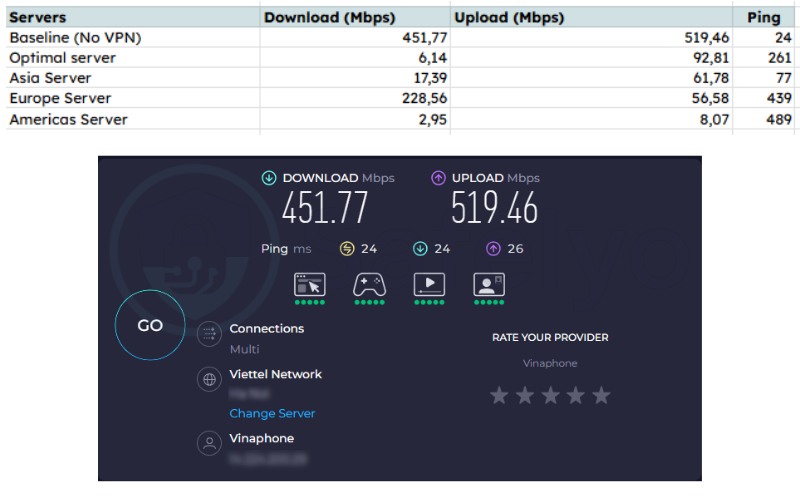
To ensure fairness, we first measure our internet speed without a VPN (Baseline). We then connect to the VPN and measure the percentage drop-off. This allows our results to remain relevant regardless of your own ISP speed.
We test Local speed (nearest server) and Long-distance speed (US, UK, Europe, Asia) to evaluate global routing. We record Download Speed, Upload Speed, and Ping (Latency).
Scoring rubric:
- 0.1 – 3.9 (Unusable): Speed drops by more than 70% OR falls below 5 Mbps; frequent disconnections and timeouts; extremely high latency (> 300ms), making modern browsing painful.
- 4.0 – 5.9 (Slow): Speed drops between 50% and 70%; visible buffering during HD video playback; sluggish page loading and noticeable lag on distant servers.
- 6.0 – 7.9 (Average): Speed drops between 30% and 50% OR maintains > 50 Mbps; stable for HD streaming but struggles with simultaneous 4K streams or massive downloads on international servers.
- 8.0 – 9.4 (Fast): Speed drops between 15% and 30% OR maintains > 200 Mbps; smooth 4K/UHD streaming and fast file downloads; consistent stability with low latency increase (< 50ms locally).
- 9.5 – 10.0 (Lightning fast): Speed drops by less than 15% OR maintains > 400 Mbps+ (saturating Gigabit lines); handles 8K streaming and heavy torrenting effortlessly; consistent global performance indistinguishable from non-VPN usage.
3.3. Server network (10% of total score)
A large server network reduces congestion and provides more options for geo-spoofing.
How we test:
We analyze the raw numbers, counting the Total Servers and the number of Countries and Cities available. We investigate the infrastructure to distinguish between Physical Servers (hardware actually in that country) and Virtual Locations (IPs assigned to a server elsewhere).
We also prioritize VPNs that Own and Colocate their hardware rather than renting cheap space from third-party data centers.
Scoring rubric:
- 0.1 – 3.9 (Limited): Fewer than 20 countries; small server count (<500); heavy reliance on rented virtual servers without disclosure.
- 4.0 – 6.9 (Standard): 20–50 countries; 1,000+ servers; decent coverage in US/Europe but lacks presence in Asia/Africa/South America.
- 7.0 – 8.9 (Extensive): 50–90 countries; 3,000+ servers; good mix of physical and virtual servers; city-level selection in major countries.
- 9.0 – 10.0 (Global): 90+ countries; 5,000+ servers; owns significant infrastructure (colocated); massive city-level variety; specialized servers for streaming/privacy.
3.4. Apps & user experience (5% of total score)
VPN software should be accessible to everyone, from tech novices to IT professionals.
How we test:
We install the VPN on Windows, macOS, Android, and iOS to check for cross-platform consistency.
We evaluate Ease of Use (how many clicks to connect?), Interface Design (is it modern and intuitive?), and Settings Clarity (are features explained well?). We also look for Linux support and Router compatibility.
Scoring rubric:
- 0.1 – 3.9 (Frustrating): Clunky, outdated interface; frequent crashes; difficult to install; major features missing on Mac or Mobile apps.
- 4.0 – 6.9 (Functional): Basic interface works but lacks polish; settings are confusing; significant disparity between Windows and Mac apps.
- 7.0 – 8.9 (User-friendly): Modern design; “Smart Connect” works well; consistent experience across all major platforms; easy to find settings.
- 9.0 – 10.0 (Seamless): Beautiful, intuitive UX; one-click setup; full feature parity across all OS (including Linux/Android TV); helpful tooltips and advanced customization options.
3.5. Pricing & value (10% of total score)
We determine if the service is actually worth your hard-earned money.
How we test:
We compare the Monthly and Annual Pricing against the industry average. We check for Hidden Fees, deceptive renewal prices (e.g., price doubles after year one), and the number of Simultaneous Connections allowed.
We also test the Money-Back Guarantee by actually requesting a refund to see if the process is easy or if they fight to keep your money.

Scoring rubric:
- 0.1 – 3.9 (Overpriced): Expensive plans ($10+/mo) with few features; restrictive refund policy; low device limit (1-3 devices).
- 4.0 – 6.9 (Fair): Average market price; standard 30-day guarantee; 5 simultaneous connections; good value but nothing special.
- 7.0 – 8.9 (Great value): Competitive long-term discounts (<$3/mo); generous device limit (7-10 connections); transparent renewal pricing.
- 9.0 – 10.0 (Unbeatable): extremely low long-term price (<$2.50/mo) OR unlimited simultaneous connections; fully anonymous payment options (Crypto/Cash); hassle-free, instant refunds.
3.6. Streaming capabilities (10% of total score)
Many users buy VPNs specifically to access global content catalogs.
How we test:
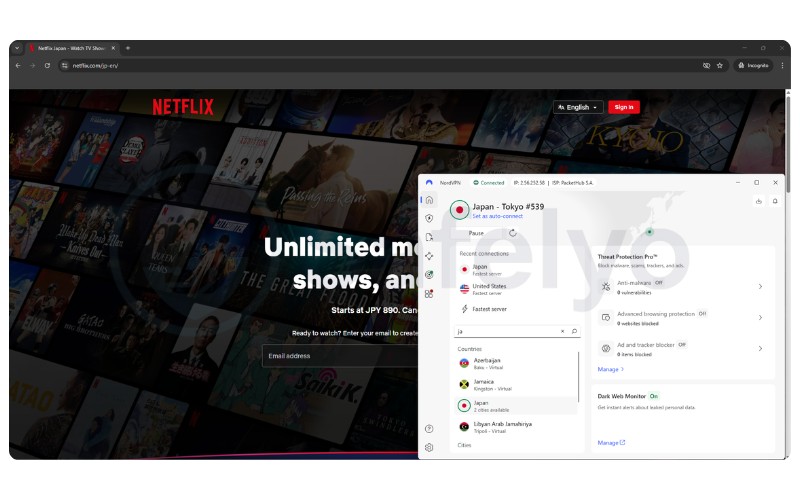
We test the VPN against the toughest geo-blocks in the industry. We attempt to stream content from Netflix (US, UK, Japan, Canada libraries), Disney+, Amazon Prime Video, BBC iPlayer, and Hulu.
We do not just check access; we verify that the video loads in HD/4K quality without buffering or “Proxy Detected” error messages.
Scoring rubric:
- 0.1 – 3.9 (Blocked): Fails to unblock Netflix or any major platform; frequent black screens or proxy errors.
- 4.0 – 6.9 (Inconsistent): Unblocks US Netflix but fails with other regions or services like BBC iPlayer; video quality is often SD due to slow speeds.
- 7.0 – 8.9 (Reliable): consistently unblocks major services (Netflix, Disney+, Hulu); HD streaming is stable; occasional buffering on live TV.
- 9.0 – 10.0 (Streaming Powerhouse): Unblocks 10+ Netflix libraries and all niche services (DAZN, regional TV); instant 4K loading; no buffering; dedicated streaming servers.
3.7. Gaming performance (5% of total score)
Gamers need stability and low latency, not just raw download speed.
How we test:
We tested VPNs in a high-speed competitive environment using popular games (e.g., Counter-Strike 2, Valorant, or Call of Duty).
We measure Ping (Latency) to the game server, watch for Jitter (spikes in lag), and monitor for Packet Loss. We also check if the VPN offers DDoS protection for gamers.
Scoring rubric:
- 0.1 – 3.9 (Unplayable): Ping >100ms on local servers; frequent rubber-banding and disconnects.
- 4.0 – 6.9 (Casual Only): Playable ping (50-80ms) but noticeable lag spikes; okay for strategy games but bad for shooters.
- 7.0 – 8.9 (Competitive): Low ping (<40ms locally); stable connection with minimal jitter; suitable for most FPS games.
- 9.0 – 10.0 (Esports Ready): Minimal impact on ping (<25ms added); absolutely stable connection; built-in protection against DDoS attacks. Includes Smart DNS or easy router setup for consoles
3.8. Torrenting & P2P (5% of total score)
For users who share files, safety and speed are paramount.
How we test:
We investigate if the VPN allows P2P traffic on all servers or restricts it to specific ones. We download large test files (legal Linux ISOs) via BitTorrent clients like qBittorrent to measure real-world Download Speeds.
We give significant weight to features like Port Forwarding, which helps with seeding and connecting to peers, and the presence of a SOCKS5 Proxy.
Scoring rubric:
- 0.1 – 3.9 (Restricted): P2P blocked on most servers; aggressive throttling of torrent traffic; DMCA notices forwarded to users (logs).
- 4.0 – 6.9 (Basic): P2P allowed but only on specific “specialty” servers; no port forwarding; average speeds.
- 7.0 – 8.9 (Good): P2P supported on most/all servers; good speeds; functional Kill Switch ensures safety during downloads.
- 9.0 – 10.0 (P2P Optimized): P2P allowed on 100% of servers; Port Forwarding available; SOCKS5 proxy included; lightning-fast bitrate; audited no-logs for maximum safety.
3.9. Customer support (5% of total score)
When things break, you need help fast from a human, not a robot.
How we test:
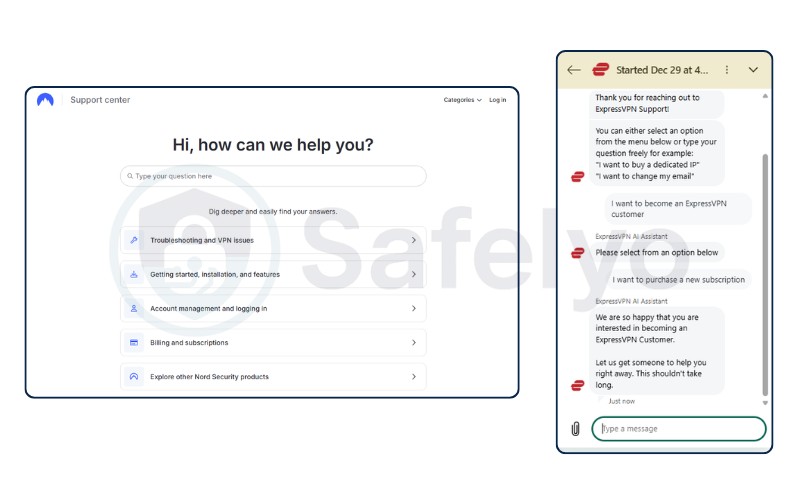
We conduct a “Mystery Shopper” test.
We contact customer support via Live Chat and Email at different times of the day (morning, noon, late night).
We evaluate Response Time (how long to reach an agent), Humanity (bot vs. person), and Technical Competence (we ask complex questions like “How do I configure MTU?” to test their knowledge).
We also review the Knowledge Base (FAQs, setup guides).
Scoring rubric:
- 0.1 – 3.9 (Poor): No live chat (email only); slow response (>24 hours); unhelpful or rude agents; outdated FAQs.
- 4.0 – 6.9 (Average): Live chat available but ruled by chatbots; agents rely heavily on scripts; basic problem-solving only.
- 7.0 – 8.9 (Helpful): 24/7 Live chat with real humans; fast response times (<2 minutes); agents are friendly and solve most issues.
- 9.0 – 10.0 (World Class): Instant access to technical experts (not just support agents); comprehensive video tutorials; supports multiple languages; deep technical troubleshooting capability.
4. Our test lab & devices
To ensure our results are scientifically consistent and reproducible, Safelyo uses a standardized set of hardware for all reviews. We do not rely on emulators; we use the real devices that you likely have in your home.
Our current testing hardware:
- Desktop PC: Windows 11
- Laptop: MacBook Air & Lenovo/Dell/Asus (Windows 11)
- Mobile devices: iPhone 15/16/17 (Latest iOS) and Samsung (Latest Android)
Software & analysis tools:
- Network analysis: Wireshark (Packet inspection), Nmap.
- Speed testing: Ookla Speedtest (Desktop app and CLI), nPerf.
- Leak verification: IPLeak.net, DNSLeakTest.com, BrowserLeaks.com.
5. Updates & retesting policy
The VPN industry moves at lightning speed. A VPN that unblocks Netflix today might be blocked tomorrow. A service that is fast today might become congested next month due to user influx.
To combat this, Safelyo employs a continuous retesting cycle. We do not simply write a review and forget it. We revisit our top-rated VPNs regularly (typically monthly or quarterly) to re-verify speeds, security features, and streaming capabilities.
Every review on Safelyo includes a “Last Updated” date. If a VPN undergoes a major change, such as an acquisition by another company, a change in logging policy, or the release of a new protocol. We immediately re-evaluate the service and update our review to reflect the new reality.
6. Known limitations of our testing
While we strive to make our VPN reviews as accurate, fair, and reproducible as possible, it is important to acknowledge the inherent limitations of any testing methodology.
First, our speed and performance tests represent snapshots in time rather than permanent guarantees. VPN performance can fluctuate based on server load, routing changes, regional congestion, and sudden increases in user traffic. A VPN that performs exceptionally well during our tests may experience temporary slowdowns in real-world conditions, and vice versa.
Second, although we test VPNs across multiple global locations, we cannot test every server in every country. Some niche locations or newly added servers may perform differently from the core regions we evaluate.
Third, certain features are subject to constant countermeasures by streaming platforms, ISPs, and governments. This includes streaming unblocking, censorship evasion, and advanced obfuscation tools. As a result, access that works today may stop working tomorrow without any change on the VPN provider’s side.
Finally, while we carefully analyze privacy policies, audits, and legal history, we cannot independently verify internal server operations or undisclosed logging practices beyond what has been publicly proven through audits, court cases, or technical testing.
For these reasons, our scores should be viewed as well-informed expert assessments rather than absolute or permanent truths.
7. How results may differ by user location
VPN performance and reliability can vary significantly depending on a user’s physical location, internet service provider (ISP), and local network conditions.
Our testing is conducted using high-quality residential and business-grade internet connections in controlled environments. However, users in regions with limited internet infrastructure, aggressive ISP throttling, or government-level traffic filtering may experience different results.
Distance also plays a major role. A VPN server that delivers excellent speeds in Europe or North America may perform less efficiently for users connecting from Southeast Asia, Africa, South America, or Oceania due to longer routing paths and fewer nearby data centers.
Additionally, streaming availability is highly region-dependent. A VPN that successfully unblocks a specific Netflix library from one country may not work the same way when accessed from another region, even when using identical servers.
For these reasons, we encourage readers to treat our results as a strong reference point while understanding that individual experiences may vary. When possible, we recommend using a VPN’s money-back guarantee to test performance from your specific location and ISP.
8. Conclusion
At Safelyo, our goal is to be the final resource you ever need to consult before choosing a VPN. By combining our strict 30% focus on privacy & security with rigorous, human-led performance testing, we ensure that high scores are only awarded to services that genuinely respect your data and deliver on their promises.
We are committed to helping you navigate the complex world of cybersecurity. If you have questions about our methodology or want to suggest a provider for us to review, please do not hesitate to contact our editorial team.
Now that you understand how we test, explore our comprehensive VPN Reviews to find the right tool for your digital privacy.